Festivals in Gilgit-Baltistan Worth Planning Your Trip Around: A Complete 2026 Guide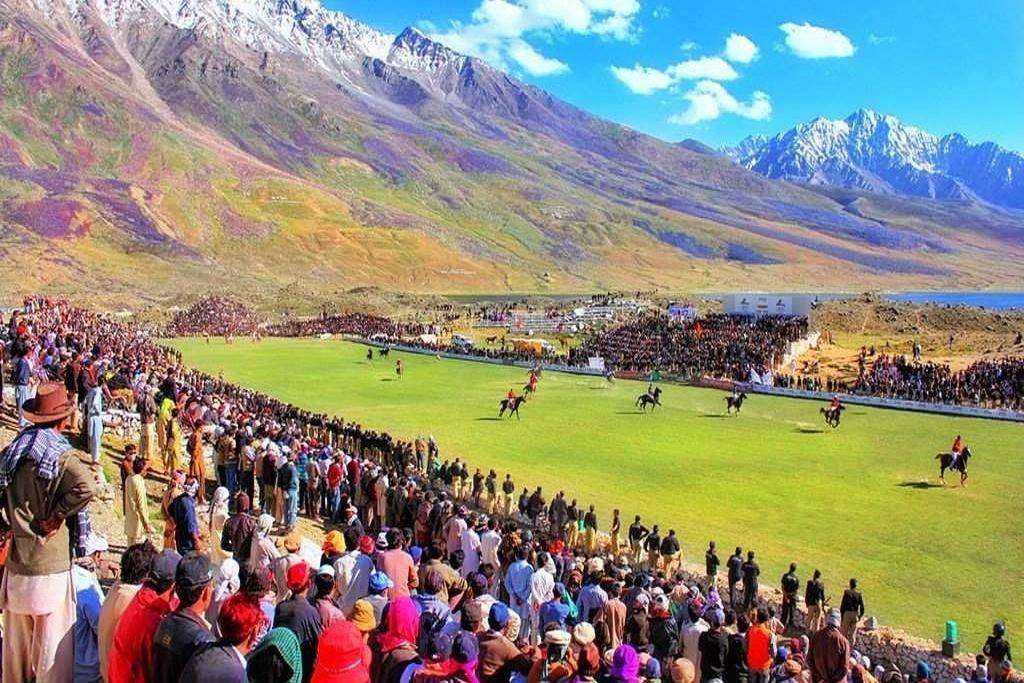
Most travelers who visit Gilgit-Baltistan plan their trip around the landscape. They come for the peaks, the glaciers, the high passes, and the extraordinary visual drama of a region where the Karakoram, Himalaya, and Hindu Kush converge. This is entirely understandable. The landscape of Gilgit-Baltistan is among the most spectacular on earth.
But there is a category of visitor who discovers something more: that the timing of a visit to Gilgit-Baltistan can be built around its cultural calendar, and that the festivals, traditional events, and community celebrations of this region add a human and historical dimension to the landscape that transforms a good trip into an extraordinary one. The Shandur Polo Festival at 3,700 meters above sea level. The Navroz celebrations in Hunza when the whole valley marks the Persian New Year at the edge of spring. The Kalash festivals in the neighboring valleys of Chitral, where an indigenous community celebrates its ancient religion in ways unchanged for centuries. The harvest events across the mountain villages of Gilgit, Hunza, and Baltistan, where the rhythm of agricultural life still shapes the social calendar.
This guide covers every major festival and traditional event in Gilgit-Baltistan worth building a visit around, with specific dates, locations, cultural context, travel planning guidance, and information on how Perch Travels and Tours manages cultural tour packages to the region.
Why Gilgit-Baltistan Festival Travel Is Unlike Anywhere Else
Gilgit-Baltistan is Pakistan’s northernmost administrative territory, covering approximately 72,000 square kilometers of the world’s most concentrated mountain terrain. Its population of roughly two million people is spread across a landscape of valleys, glacier-fed rivers, and mountain passes, in communities that have maintained distinct cultural identities shaped by geography, history, and the interaction of Buddhist, animist, Ismaili Muslim, Sunni Muslim, and Shia Muslim traditions across different valleys and communities.
This cultural plurality is what makes the festival calendar of Gilgit-Baltistan so rich. The traditional events of the region do not all come from a single religious or ethnic tradition. They come from the full range of the territory’s human history, from the Navroz celebrations that reflect the Ismaili community’s Persian cultural inheritance to the polo traditions that date to the Mir dynasties of Hunza and Nagar to the spring festivals that mark the agricultural cycle in the high-altitude farming communities of Baltistan and beyond.
For travelers planning a cultural visit to Gilgit-Baltistan, this diversity means that almost any period of the year from late March through October holds at least one event worth timing a trip around.
The Shandur Polo Festival: The Most Spectacular Sporting Event in Pakistan
The Shandur Polo Festival is the single most celebrated annual event in Gilgit-Baltistan and one of the most extraordinary traditional sporting events in the world. It is held every year in early July at Shandur Pass, a high-altitude plateau at 3,700 meters above sea level on the border between Gilgit-Baltistan and Khyber Pakhtunkhwa, and it pits the polo teams of Gilgit against those of Chitral in a three-day tournament that draws tens of thousands of spectators from across Pakistan and a growing number of international visitors who travel specifically to witness it.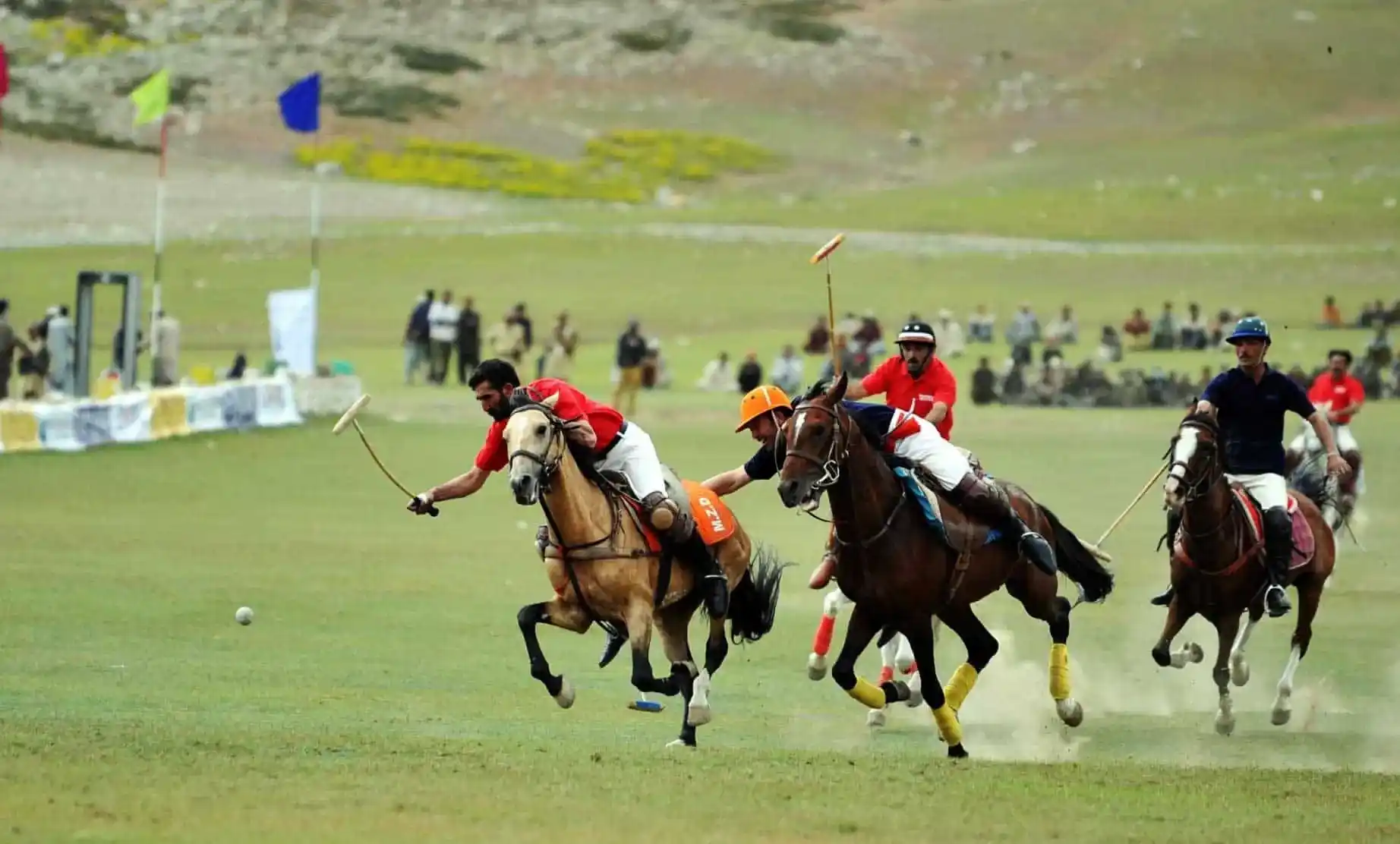
Polo has been played at Shandur for centuries. The game as practiced here is a traditional form called free-style polo, which differs from international tournament polo in its speed, physicality, and the absence of many of the rules that modern polo has imposed on the sport. The horses are mountain-bred animals of extraordinary agility, the players are hereditary riders whose families have played the game for generations, and the atmosphere on the high plateau during a match, with the crowd pressing close to the field, the sound of traditional music from the sidelines, and the peaks of the Hindu Kush and Karakoram rising above the plateau in every direction, is genuinely unlike anything available in the rest of the sporting world.
The three-day Shandur festival surrounds the polo matches with traditional music performances including sitar and rubab, folk dance, crafts exhibitions, and the social life of the temporary encampment that grows around the festival ground as visitors arrive by jeep along the mountain tracks from both the Gilgit and the Chitral sides. Staying on the Shandur Plateau during the festival, in tents or the most basic accommodation available, is for many visitors the most memorable overnight experience of their entire Pakistan trip.
Planning a visit to Shandur requires significant advance arrangement. The road from Gilgit to Shandur via Gupis and Phundar is long and requires a sturdy vehicle, and the road from Chitral via Mastuj requires similar preparation. Accommodation on the plateau during the festival is extremely limited and must be arranged before arrival. Perch Travels and Tours manages complete Shandur Festival tour packages that include vehicle transport from Gilgit or Islamabad, plateau camping accommodation, and guide support throughout the event.
Navroz: The Persian New Year in Hunza and Gilgit
Navroz, the Persian New Year celebrated on or around the spring equinox of March 21st, is the most spiritually significant festival in the calendar of the Ismaili Muslim communities of Hunza, Gilgit, and the upper valleys of Gilgit-Baltistan. The Ismaili community, which follows the Aga Khan as its spiritual leader, has deep cultural roots in the Persian and Central Asian traditions that brought Navroz into this region centuries ago, and the celebration of Navroz in Hunza is the most genuine and emotionally resonant of all the cultural events a traveler can witness in the valley.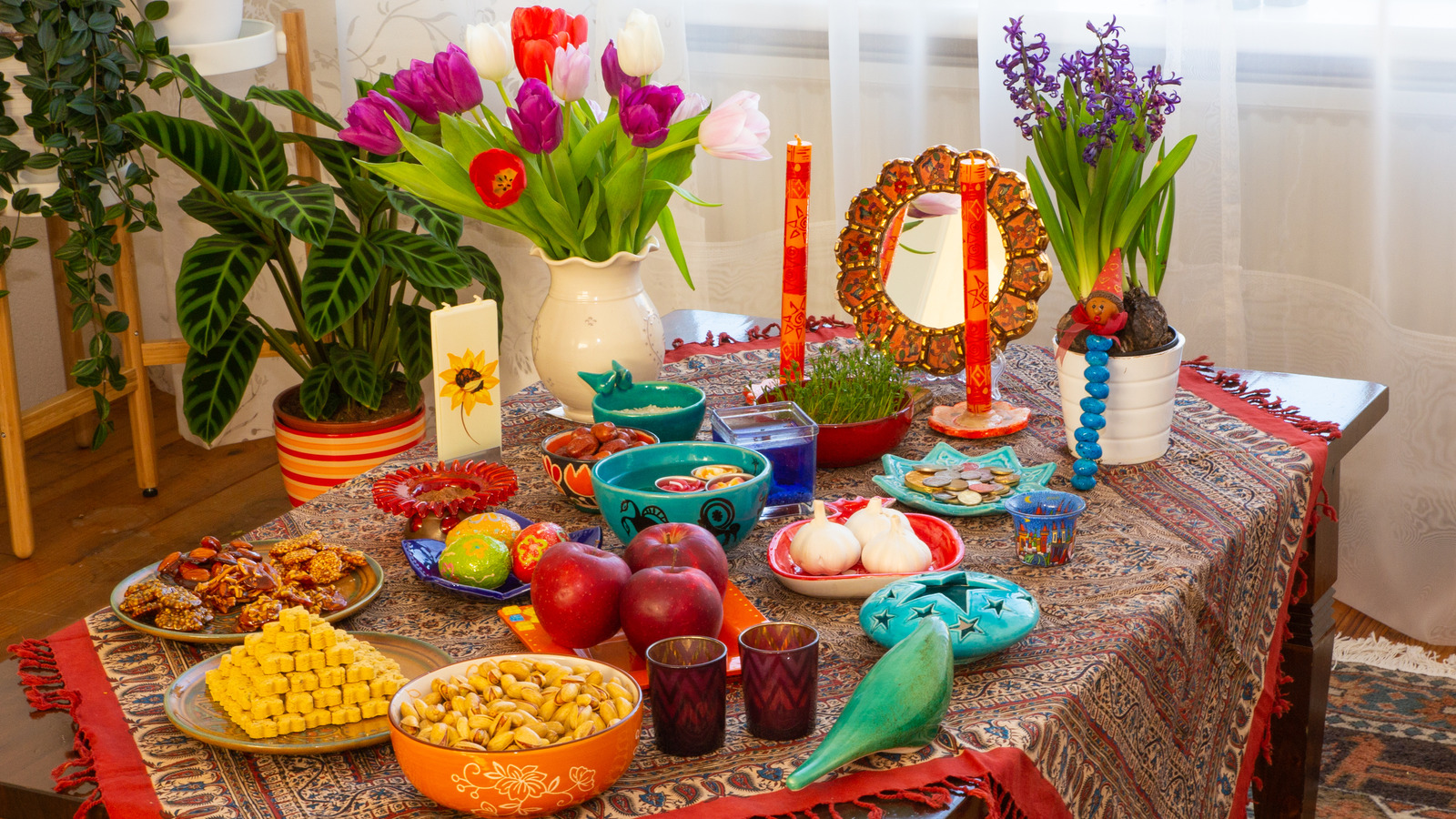
On the day of Navroz, families across Hunza and Gilgit wear traditional dress, visit each other’s homes, exchange sweets and dried fruits, and attend communal prayers and celebrations. The streets of Karimabad carry the sound of traditional music, the smell of special Navroz foods being prepared in every home, and the sight of the entire community in festive engagement. The combination of the community celebration, the arrival of spring in the mountain valley, and in years when the apricot blossom is early, the first pink flowers appearing on the trees above the town creates a sensory experience that is specific to this place and this moment in the year.
Navroz in late March also coincides with the very beginning of the blossom season in Hunza, and travelers who time their visit to arrive for Navroz and stay through the peak of the apricot blossom in mid to late April experience the valley’s two most celebrated annual events in a single extended visit. Perch Travels and Tours builds Navroz and blossom season Hunza tour packages that sequence the visit to capture both the cultural celebration and the landscape spectacle.
Jashn-e-Baharan: Spring Festivals Across the Region
Jashn-e-Baharan, the Festival of Spring, is celebrated in various forms across the valleys of Gilgit-Baltistan in the weeks following Navroz as the growing season begins and the mountain communities mark the end of the long winter with communal celebration. In Hunza, the spring festival season encompasses blossom viewing, traditional music gatherings, and the first agricultural activities of the year. In Gilgit city, Jashn-e-Baharan includes formal festival events organized by the regional government with performances of traditional music, polo exhibitions, and cultural showcases.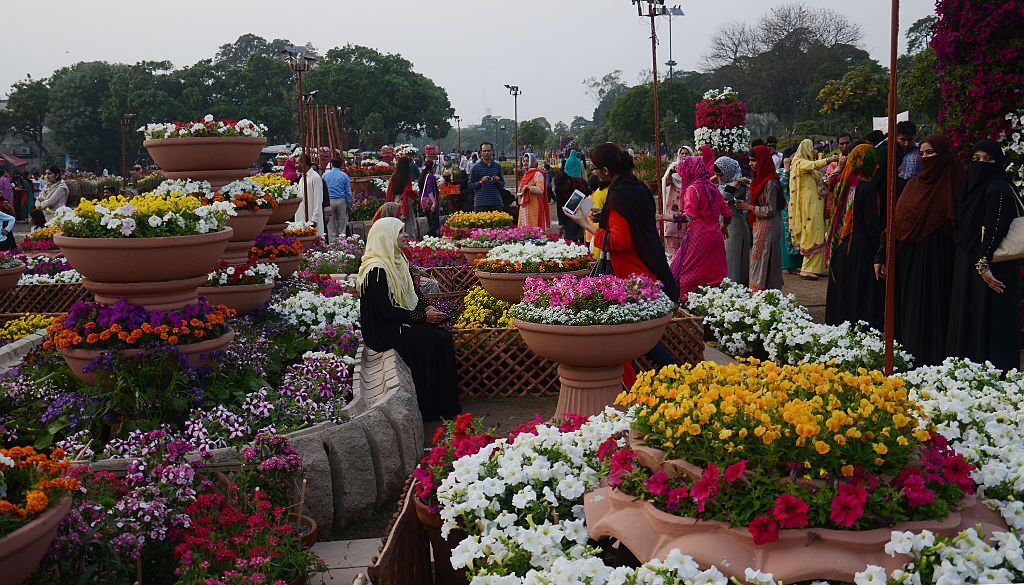
The Hunza Valley during the spring festival period in April is one of the most visually and socially complete travel destinations available anywhere in Pakistan. The blossom on the apricot and cherry trees that cover the terraced hillsides of Karimabad and the surrounding villages turns the landscape into a painting that no photograph adequately represents, and the community engagement of the spring festival season means that the valley’s social life is at its most open and most welcoming to visitors who arrive during this period.
The Kalash Festivals: Living Heritage in the Valleys of Chitral
The Kalash valleys of Bumburet, Rumbur, and Birir in Chitral district, which borders Gilgit-Baltistan and is accessible from Gilgit through a combined road and domestic flight journey, hold the most culturally extraordinary festival calendar in the entire northern region of Pakistan. The Kalash people, a small indigenous community of a few thousand who maintain an ancient polytheistic religion, celebrate three major festivals each year that have remained largely unchanged for centuries and that represent the most direct living connection to the pre-Islamic religious traditions of the Hindu Kush.
Chilam Joshi: The Spring Festival (May)
Chilam Joshi is the Kalash spring festival, celebrated in May to mark the movement of the herds from the valley floors to the high mountain pastures and the beginning of the productive season. The festival includes traditional music and dance in the open-air community spaces of the valleys, offerings of milk and dairy products, the decoration of houses and livestock with flowers, and the elaborate dress of the Kalash women in their traditional black robes and highly ornamented headdresses. Chilam Joshi is the most colorful and most photographic of the three Kalash festivals and draws the largest number of outside visitors.
Uchal: The Summer Festival (August)
Uchal is celebrated in mid-August to mark the height of the summer grazing season and the impending return of the herds from the high pastures. The festival involves offerings of the products of the summer herds, including cheese and milk, alongside communal dancing and music that continues across multiple days. Uchal is a more intimate festival than Chilam Joshi and offers a deeper view into the spiritual and agricultural practices of the Kalash community for visitors willing to spend several days in the valleys during the celebration period.
Chaumos: The Winter Solstice Festival (December)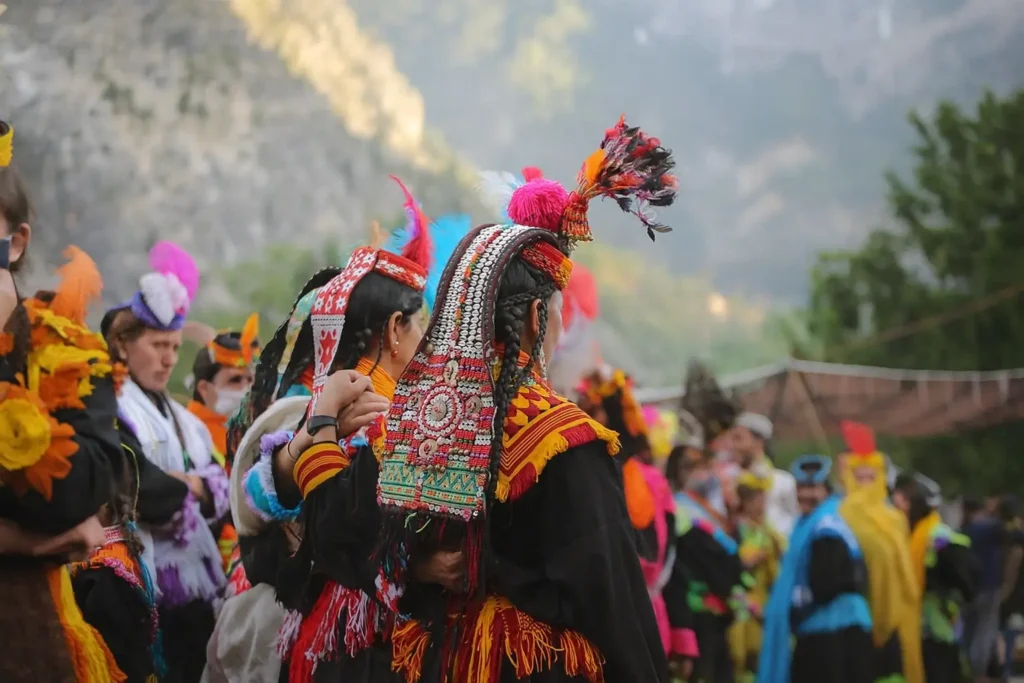
Chaumos is the most sacred of the three Kalash festivals, celebrated in December around the winter solstice with purification rituals, prayers, traditional music, and the lighting of fires that mark the passage from the old year to the new. Chaumos involves rituals that are specific to the Kalash religion and that take place in the sacred Jeshtak houses that are central to their community and spiritual life. Visiting Chaumos requires more cultural sensitivity and more specific logistical preparation than the spring and summer festivals, and is best approached through an operator with existing community relationships in the Kalash valleys. Perch Travels and Tours has those relationships and manages Kalash festival visits with the cultural awareness and logistical care the community deserves.
Traditional Polo Across Gilgit-Baltistan: Beyond Shandur
While the Shandur Festival is the most celebrated polo event in the region, traditional polo in Gilgit-Baltistan is not confined to a single annual tournament. Polo grounds exist across the territory, from Gilgit city to Ghizer, Hunza, Nagar, Ghanche, and Skardu, and informal matches and local tournaments take place throughout the summer season as a central part of the social and cultural life of the mountain communities.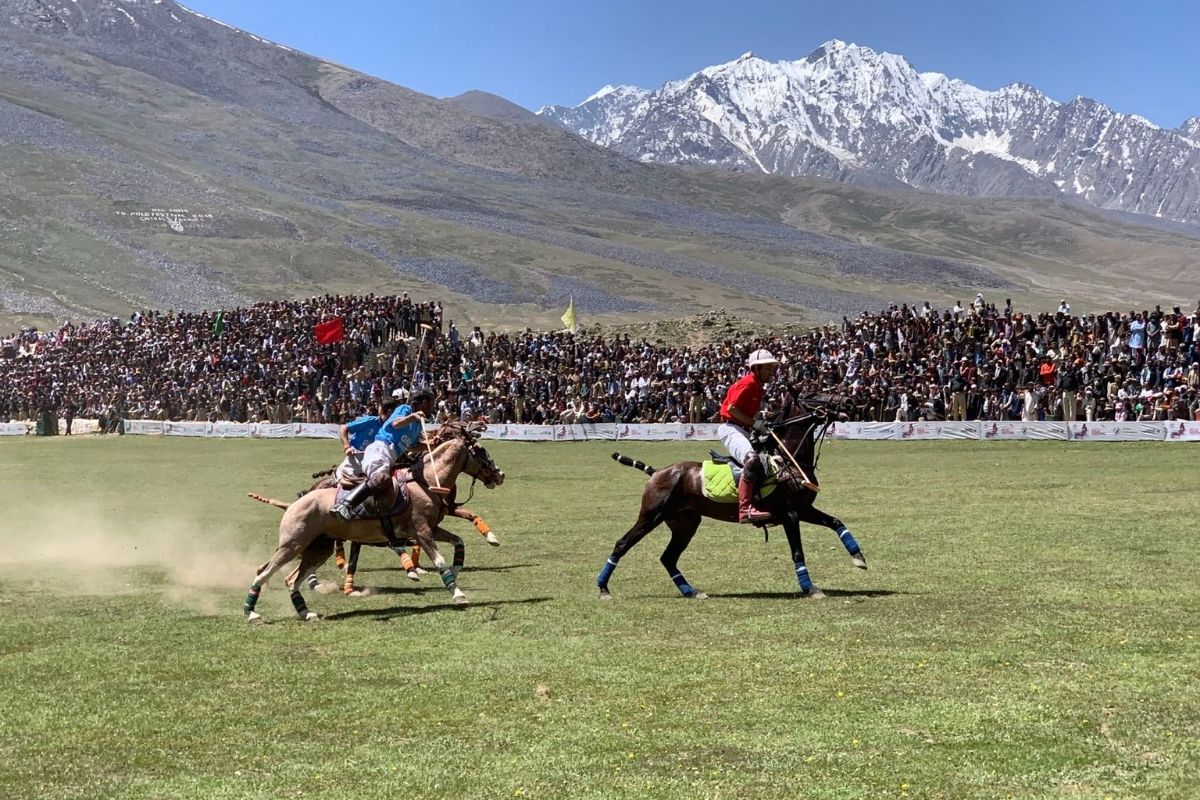
The polo ground in Gilgit city, located in the center of town near the main bazaar, hosts matches and practice sessions on most clear afternoons during the summer months. Watching a polo match at the Gilgit ground, surrounded by local spectators and with the mountains of the Karakoram visible above the town, is an informal and entirely accessible cultural experience that requires no advance planning and costs nothing. This is traditional polo not as a festival event but as a living community practice, and the quality of horsemanship and the passion of the crowd make it memorable in a way that the formal festival environment at Shandur, as extraordinary as that is, cannot fully replicate.
In Hunza, the polo ground at Karimabad also hosts regular summer matches, and the combination of the polo and the mountain backdrop of Rakaposhi above the valley makes it one of the most photographically rewarding sporting settings in Pakistan.
Harvest Festivals and Traditional Events Across the Valleys
Beyond the named festivals and the polo events, the agricultural communities of Gilgit-Baltistan observe a seasonal calendar of traditional celebrations tied to the harvest of the crops and fruits that define each valley’s agricultural identity.
In Hunza, the apricot harvest in July and August is accompanied by the communal work of drying, processing, and storing the fruit that is both the economic foundation of the valley and the central ingredient in Hunza’s distinctive food culture. The social activity around the harvest, with families working together on their terraces and rooftops while the drying apricots cover every flat surface in the village, creates a visual and human experience that is specific to this place and this season.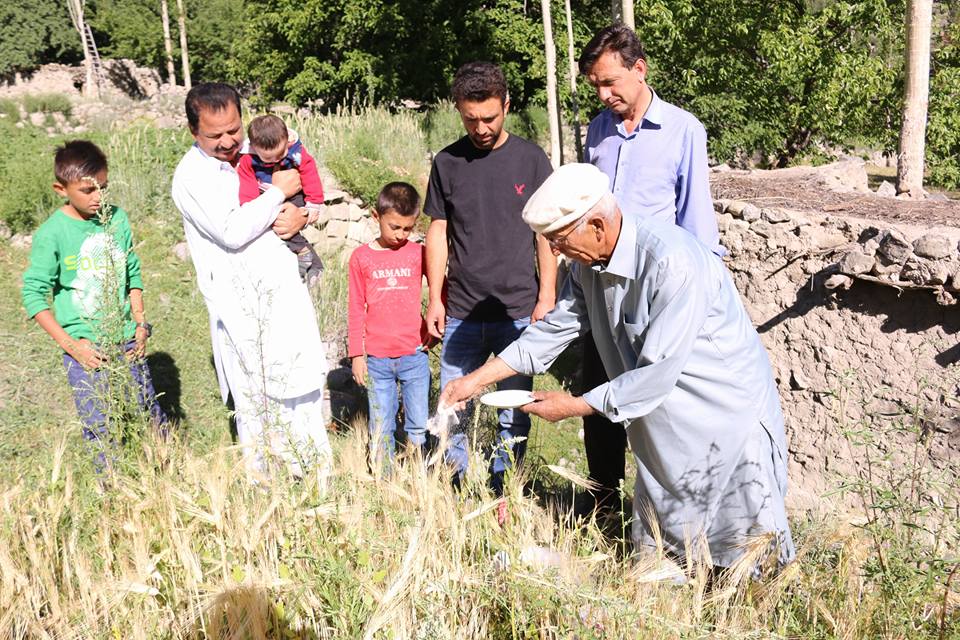
In Baltistan, the valley communities of Skardu, Shigar, and Khaplu observe harvest celebrations that include traditional music and dance performances in the autumn as the grain and vegetable harvests are brought in from the fields. These events are not organized for tourists and are not listed in any festival calendar, but travelers who are present in the valleys during harvest season and who engage with the communities through community homestays or with local guide support encounter them naturally as part of daily life.
The Wakhi communities of the Ishkoman and Yasin valleys in Ghizer district, and those in the upper Hunza valley beyond Passu, have their own traditional celebration calendar linked to the Wakhi cultural heritage of the Central Asian high plateau, including spring planting ceremonies and autumn harvest gatherings that are among the least documented and most genuinely traditional events available to any visitor in the region.
Eid and Islamic Festivals in Gilgit-Baltistan
The Islamic festival calendar is observed across all of Gilgit-Baltistan’s communities, though the specific expression of Eid al-Fitr and Eid al-Adha varies between the Ismaili, Sunni, and Shia Muslim populations that make up the region’s majority.
Eid celebrations in the mountain communities of Gilgit-Baltistan have a quality of warmth and communal gathering that reflects both the festival’s religious significance and the deep hospitality culture of the region. Visitors who are present in a mountain village during Eid find themselves welcomed into the celebration with an inclusivity that is one of the most moving expressions of Pakistani hospitality available to any traveler. Families open their homes, food is shared generously, and the atmosphere of the community is one of genuine joy and social cohesion.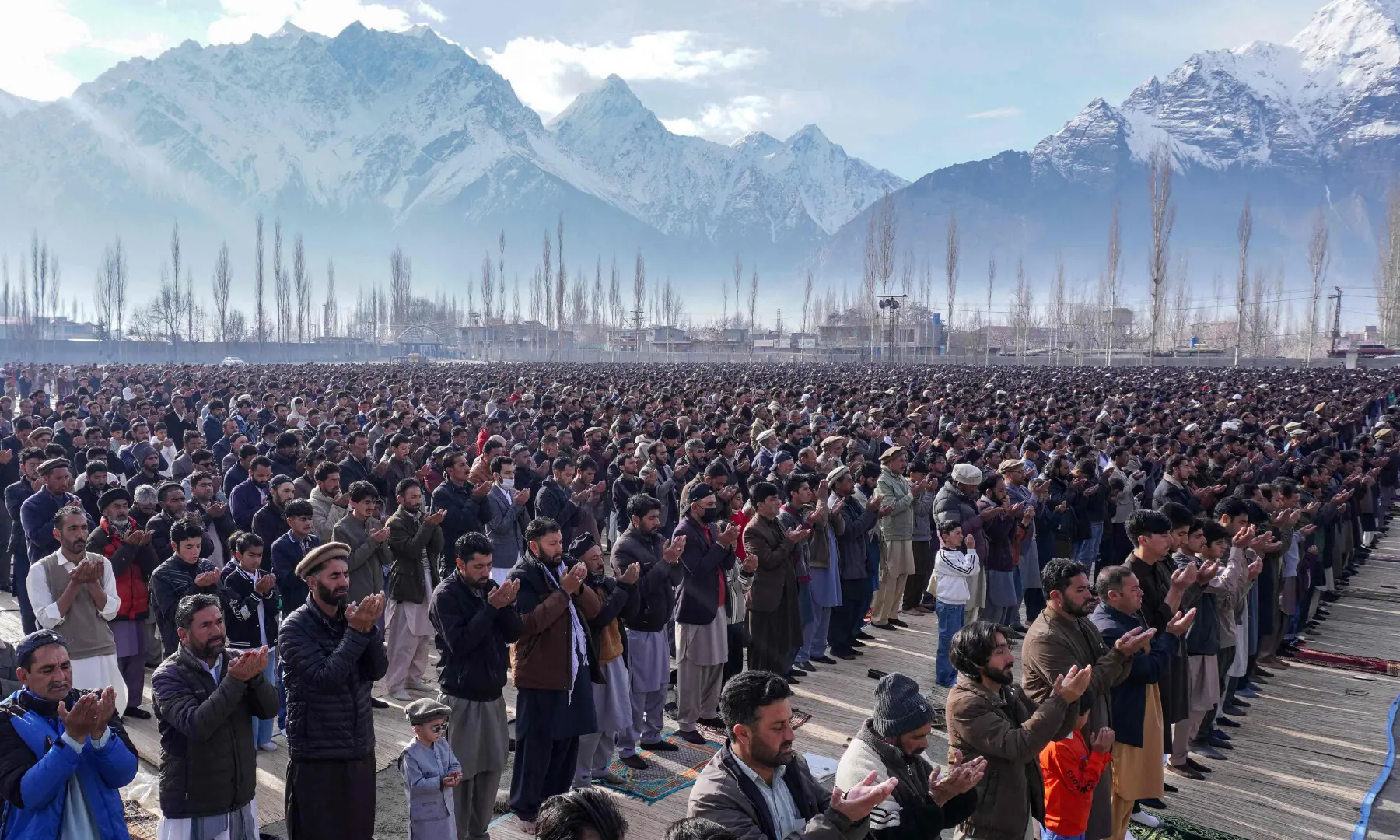
For travelers planning a visit to Gilgit-Baltistan during the Eid period, accommodation should be booked well in advance as domestic travel within Pakistan surges significantly, and the festival’s timing shifts each year according to the Islamic lunar calendar, requiring specific date confirmation before finalizing travel arrangements.
Planning Your Festival Trip to Gilgit-Baltistan
Planning a festival-timed visit to Gilgit-Baltistan requires the kind of advance preparation and local knowledge that distinguishes a well-managed trip from one that arrives at the right destination at the right time but without the access or arrangement to fully experience what is happening.
Book Accommodation Early
Festival periods in Gilgit-Baltistan consistently exceed the available accommodation supply at the best properties. For the Shandur Festival, accommodation on the plateau itself is extremely limited and requires arrangement months in advance. For Navroz in Hunza, the guesthouses in Karimabad fill quickly as both domestic visitors and international travelers time their blossom season visits to coincide with the celebration. For the Kalash festivals, the handful of guesthouses in Bumburet require early booking, and community homestays through an operator like Perch need to be confirmed well ahead.
Arrange Ground Transportation in Advance
The routes to the main festival locations in Gilgit-Baltistan require specific vehicles and knowledgeable drivers. The Shandur Plateau is accessible by 4×4 only on rough mountain tracks from either Gilgit or Chitral. The Kalash valleys require a jeep from Chitral city after the domestic flight from Islamabad. Hunza during festival season sees significant vehicle demand that makes last-minute hire difficult and expensive. Perch Travels and Tours arranges all ground transportation for their Gilgit-Baltistan festival tour packages, including the specific vehicle types required for each route.
Time the Domestic Flights Carefully
Domestic flights between Islamabad and Gilgit or Skardu are subject to weather-related cancellations that are particularly common during the afternoon when cloud development over the mountain ranges closes the approaches. Morning flights have significantly higher reliability rates than afternoon departures, and building a buffer day on each end of the trip is the most reliable insurance against a cancelled flight ruining the festival timing. Perch Travels and Tours books domestic flights on all their Gilgit-Baltistan itineraries and advises on the buffer days needed for each specific festival and season.
Respect the Cultural Context of Each Event
The festivals of Gilgit-Baltistan, and particularly the Kalash festivals, are sacred and culturally significant events for the communities that celebrate them. Visitors should dress modestly and in line with the specific cultural context of each community, ask before photographing individuals or ritual spaces, follow the guidance of local guides or community contacts on which events and spaces are open to outside visitors and which are not, and approach the experience as witnesses to something genuine rather than as consumers of a cultural performance.
How Perch Travels and Tours Plans Gilgit-Baltistan Festival Visits
Perch Travels and Tours manages tour packages for every major festival in Gilgit-Baltistan and the adjacent Kalash valleys of Chitral, with complete itineraries that cover all elements of a festival visit from flight and transport logistics to accommodation, local guide support, and the cultural preparation that makes the difference between a surface-level visit and a genuinely meaningful one.
Their Shandur Festival packages include the full road journey from Gilgit to Shandur via the Ghizer Valley, plateau accommodation during the three days of the festival, guide support with knowledge of both the polo tradition and the cultural context of the Chitral-Gilgit relationship, and onward arrangements to Hunza, Gilgit, or Islamabad after the festival.
Their Navroz and Blossom Season packages in Hunza combine the cultural celebration of the Persian New Year with the landscape spectacle of the apricot blossom in a single itinerary that represents the most concentrated combination of cultural event and natural beauty available anywhere in Pakistan in a single visit period.
Their Kalash Festival packages, for Chilam Joshi in May, Uchal in August, and Chaumos in December, include domestic flights to Chitral, jeep transfers to the valleys, community homestay accommodation arranged through their direct relationships with Kalash Valley families, and guide support from people with genuine knowledge of the Kalash community and the specific cultural protocols of each festival.
Their Nomad Living Pakistan service places festival visitors in community homestays across the region, providing the most immersive and most human way to experience any cultural event in Gilgit-Baltistan. Their Transportation Services cover all ground movement. Their Flight Services handle domestic sector bookings with the timing and buffer arrangements that festival visits require.
Perch holds a 5.0 Google rating from over 24 verified clients and is rooted in Hunza Valley, which means their knowledge of Gilgit-Baltistan’s cultural calendar is not drawn from research but from years of direct community relationship in the region they operate within.
Contact Perch Travels and Tours at contactus@perchtravelsandtours.com or visit perchtravelsandtours.com to plan your Gilgit-Baltistan festival visit for 2026.
Frequently Asked Questions About Festivals in Gilgit-Baltistan
What is the most famous festival in Gilgit-Baltistan and when does it take place?
The most famous festival in Gilgit-Baltistan is the Shandur Polo Festival, held annually in early July at Shandur Pass at 3,700 meters above sea level on the border between Gilgit-Baltistan and Khyber Pakhtunkhwa. The festival is a three-day traditional polo tournament between the teams of Gilgit and Chitral, played in the free-style polo tradition that dates back centuries in the mountain communities of the Hindu Kush and Karakoram. The festival is surrounded by traditional music, folk dance, and the extraordinary atmosphere of a high-altitude encampment that forms spontaneously around the plateau polo ground as visitors arrive from both directions. Planning a visit to the Shandur Festival requires advance accommodation arrangement and vehicle transport from either Gilgit or Chitral, and Perch Travels and Tours manages complete Shandur Festival tour packages that handle every element of this logistics-intensive event.
What is the best time of year to visit Gilgit-Baltistan for cultural events and traditional festivals?
The richest period for cultural events and traditional festivals in Gilgit-Baltistan runs from late March through early August. Navroz and the beginning of blossom season in late March and April offer the most complete combination of cultural celebration and landscape spectacle in the entire year, specifically in Hunza Valley where the Ismaili community’s Navroz celebration coincides with the apricot blossom. The Kalash Chilam Joshi spring festival in May is the most visually elaborate of the three annual Kalash events. The Shandur Polo Festival in July is the most physically spectacular traditional sporting event in Pakistan. August offers the Kalash Uchal festival and various harvest-related events across the mountain valleys. September and October are quieter culturally but offer autumn colors and some of the best mountain views of the year. For travelers with flexibility, early July centered on Shandur, with the journey from Islamabad to Gilgit to the plateau and onward to Hunza afterward, represents the most event-rich single Pakistan trip available in the northern region.
Can non-Muslim visitors attend festivals in Gilgit-Baltistan and how should they prepare?
Visitors of all backgrounds and religious identities are welcome at the major festivals of Gilgit-Baltistan, including the Shandur Polo Festival, the Navroz celebrations in Hunza, and the spring and summer harvest events across the territory. The Kalash festivals in the adjacent Chitral valleys are also open to outside visitors, as the Kalash community has a long-standing tradition of welcoming respectful visitors to their celebrations. The preparation that makes any festival visit genuinely rewarding rather than superficially witnessed is primarily cultural rather than religious. Dressing modestly and appropriately for the specific community being visited, approaching photography with awareness and consent, following the guidance of local contacts and guides on which spaces and events are appropriate for outside visitors to enter, and treating the events as genuine sacred and cultural occasions rather than tourist performances are the practices that produce the quality of welcome that Gilgit-Baltistan’s communities are known for. Perch Travels and Tours provides cultural preparation guidance as part of every festival tour package they manage.
How does Perch Travels and Tours arrange festival tour packages for Gilgit-Baltistan?
Perch Travels and Tours designs complete festival tour packages for every major event in Gilgit-Baltistan, including the Shandur Polo Festival, Navroz celebrations in Hunza, the Kalash festivals in Chitral, and the harvest events across the mountain valleys. Each package is built around the specific festival dates and includes domestic flight bookings from Islamabad to Gilgit, Skardu, or Chitral as required, ground transportation in appropriate 4×4 vehicles for the specific routes to each festival location, accommodation either in community homestays through their Nomad Living Pakistan service or at vetted guesthouses in the destination areas, local guide support with genuine knowledge of the cultural context and community protocols of each event, and the practical logistics management including buffer days for weather-related flight uncertainty and vehicle contingencies for the mountain road conditions that festival travel in Gilgit-Baltistan requires. Contact Perch Travels and Tours at contactus@perchtravelsandtours.com or visit perchtravelsandtours.com to discuss festival dates and begin planning your 2026 Gilgit-Baltistan cultural visit.