
Hunza Tour Guide 2026: Your Complete Travel Guide to One of Pakistan’s Most Extraordinary Valleys
There are destinations that travelers describe accurately before visiting because the photographs prepare them well enough. Hunza Valley in Gilgit-Baltistan is not one of them. The scale of the peaks above Karimabad, the quality of the light on the apricot orchards in blossom season, the vivid turquoise of Attabad Lake against the brown desert mountains that frame it, and the quality of welcome extended by the Ismaili communities of the valley are all things that photographs indicate but cannot convey. Hunza has to be experienced in person to be fully understood, and it is, consistently and for nearly every visitor who makes the journey, better than anything they expected.
This complete Hunza tour guide covers everything a traveler needs to plan a genuine trip to Hunza Valley: the best time to visit, how to get there, every major attraction and what makes each one worth including in an itinerary, where to stay, what to eat, the practical travel details that make the difference between a smooth trip and a stressful one, and how Perch Travels and Tours plans and manages Hunza tours for travelers who want expert local knowledge and full logistical support from arrival to departure.
Why Hunza Valley Belongs on Your Pakistan Travel Itinerary
Hunza Valley sits at approximately 2,400 meters above sea level in the Karakoram range of Gilgit-Baltistan, in the far north of Pakistan. The valley is flanked by peaks of extraordinary height and visual drama, including Rakaposhi at 7,788 meters to the south, Ultar Sar at 7,388 meters directly above Karimabad, and the slender rock spire of Lady Finger at 6,000 meters, which rises from the ridge above the valley in a shape so improbable it seems designed rather than geological.
The valley is home to the Burusho people, who speak a language called Burushaski unrelated to any other language in the world, and to a Wakhi community in the upper reaches of the valley. The majority of Hunza’s population follows the Ismaili branch of Islam under the spiritual leadership of the Aga Khan, and the Aga Khan Development Network has invested significantly in education, healthcare, and community infrastructure across the valley for decades. The practical result for travelers is a population with high literacy rates, strong female participation in public life, and a community-minded culture that makes the human experience of Hunza as rewarding as its landscape.
Hunza is also the starting point for some of the most ambitious adventure and trekking objectives in the Karakoram, the base for exploring the upper reaches of the Karakoram Highway toward Khunjerab Pass and the Chinese border, and the home of a food culture built on apricots, walnuts, dried fruits, and freshly baked flatbreads that is entirely specific to the mountain valleys of this region.
Best Time to Visit Hunza Valley
Hunza is accessible and rewarding across a longer season than most Pakistan mountain destinations, which makes timing decisions more nuanced than simply choosing between summer and winter.
April to May: Blossom Season
The most photographed period in Hunza’s annual calendar is the spring blossom season, when the cherry and apricot trees that cover the terraced slopes of the valley come into simultaneous flower. The apricots typically blossom in mid to late April, turning the hillsides below Karimabad and the surrounding villages into a landscape of pale pink and white against the snow-covered peaks above. This is arguably the most beautiful period in Hunza’s year and draws photographers and travelers from across the world specifically for this spectacle. Accommodation books quickly during blossom season and should be arranged well in advance.
June to August: Peak Summer Season
Summer is the most popular season for a tour to Hunza and the period when the valley is most accessible for all types of travel. The weather is warm and generally clear, the mountain views are consistent in the mornings before afternoon cloud development, the high-altitude passes including Khunjerab are fully open, and the guesthouses and food establishments of Karimabad are fully staffed and operating. Summer is also the season when the apricots, cherries, and other fruits for which Hunza is famous are being harvested, dried, and sold, and the markets and roadside stalls are at their most abundant.
September to October: Autumn Colors
The autumn season in Hunza is less visited than summer but equally beautiful in a different register. The poplars and fruit trees turn gold and amber in October, the summer crowds have cleared, accommodation prices are lower, the air is crisp and clear, and the mountain views are often at their sharpest of the year as the post-monsoon haze lifts completely. For travelers who want the quality of experience that Hunza provides without the peak-season visitor density, September and October represent the best balance available.
November to March: Winter
Winter in Hunza is cold, with temperatures dropping significantly below zero at night and snow settling on the upper elevations. The Khunjerab Pass closes to vehicle traffic from November through April. Some guesthouses reduce capacity or close entirely. However, Karimabad itself remains accessible and inhabited throughout winter, and travelers who visit during this period experience the valley in a state of quiet that is completely different from the rest of the year and that has its own stark beauty in the snow-covered landscape.
How to Get to Hunza Valley
Getting to Hunza requires either a domestic flight to Gilgit followed by a road journey, or a full overland drive along the Karakoram Highway from Islamabad. Both options have genuine advantages and the best choice depends on the traveler’s time, budget, and appetite for one of the world’s most celebrated mountain road journeys.
By Air: Islamabad to Gilgit
The most time-efficient route to Hunza begins with a domestic flight from Islamabad’s Benazir Bhutto International Airport to Gilgit Airport, operated primarily by Pakistan International Airlines. The flight takes approximately 45 minutes and provides one of the most extraordinary aerial views available on any commercial route, passing directly above the Karakoram peaks on clear days with views of Nanga Parbat, Rakaposhi, and the broad sweep of the mountain ranges below. Gilgit Airport is served by PIA and private carriers but flights are subject to weather-related cancellations due to the challenging approach terrain. From Gilgit, the road to Karimabad in Hunza takes between one and a half to two and a half hours depending on the vehicle and road conditions.
By Road: The Karakoram Highway
The Karakoram Highway is one of the highest paved roads in the world and one of the most visually extraordinary road journeys available anywhere. The full drive from Islamabad to Karimabad covers approximately 450 kilometers and takes between 10 and 14 hours depending on stops, road conditions, and the season. The highway passes through Abbottabad, Besham, Chilas, and Gilgit, each section revealing a different face of Pakistan’s mountain landscape. The Indus Gorge section between Besham and Chilas is particularly dramatic, with the river cutting through one of the deepest gorges in the world and the road clinging to the rock face above it. Most travelers who drive the KKH describe it as one of the defining experiences of their Pakistan travel, and breaking the journey at Chilas or Gilgit for an overnight stay is strongly recommended over attempting it in a single day.
By Road: The Babusar Pass Route
During summer months when the pass is open, the Babusar Pass route from Naran through the Kaghan Valley over the 4,173-meter Babusar Pass and down to Chilas on the KKH provides an alternative approach to Hunza that is longer but passes through some of the most spectacular high-altitude mountain scenery in Pakistan. This route requires a 4×4 vehicle and should not be attempted outside the clear summer season.
Perch Travels and Tours manages all transport arrangements for Hunza tours, including domestic flight bookings, airport transfers, and road journeys in appropriate vehicles with professional drivers familiar with the KKH and its specific road conditions throughout the year.
Places to Visit in Hunza Valley
Karimabad and the Hunza Bazaar.jpg)
Karimabad is the main settlement of Hunza and the center of its tourism infrastructure. The town sits on a broad terrace above the Hunza River with Baltit Fort visible above it and the peaks of Ultar Sar and Lady Finger rising dramatically behind. The Karimabad bazaar is a compact, walkable collection of shops selling Hunza’s famous dried fruits, apricot oil, local embroidery, gemstones mined in the surrounding mountains, and woodwork. Walking through the bazaar in the morning, when the light falls across the stone and plaster buildings and the sound of the mountain above the town is the loudest thing present, is one of the quietest and most genuine small-town market experiences in Pakistan.
Baltit Fort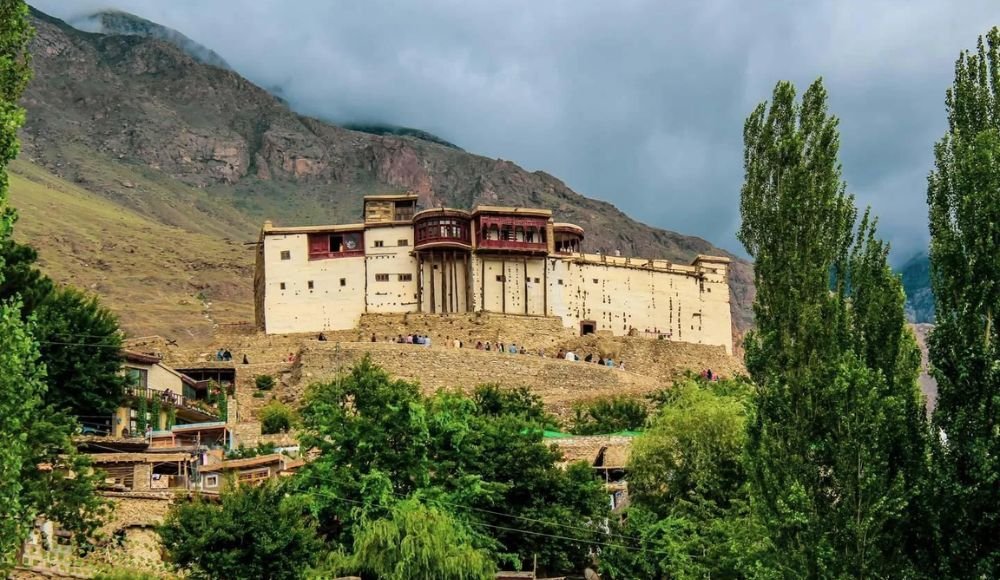
Baltit Fort, sitting on a rock spur directly above Karimabad at approximately 2,750 meters, is the most important single heritage site in Hunza and one of the most significant historic buildings in Gilgit-Baltistan. The fort was the royal residence of the Mirs of Hunza for over 700 years, with the earliest structures dating to the 8th century and subsequent additions and modifications spanning the Tibetan, Chinese, and Kashmiri cultural influences that passed through the valley over the following centuries. The fort was restored under the Aga Khan Trust for Culture in the 1990s and is now a museum open to visitors, with exhibits covering Hunza’s royal history, architecture, and cultural heritage. The views from the fort’s upper terrace across the valley and toward Rakaposhi are among the finest in the entire region.
Altit Fort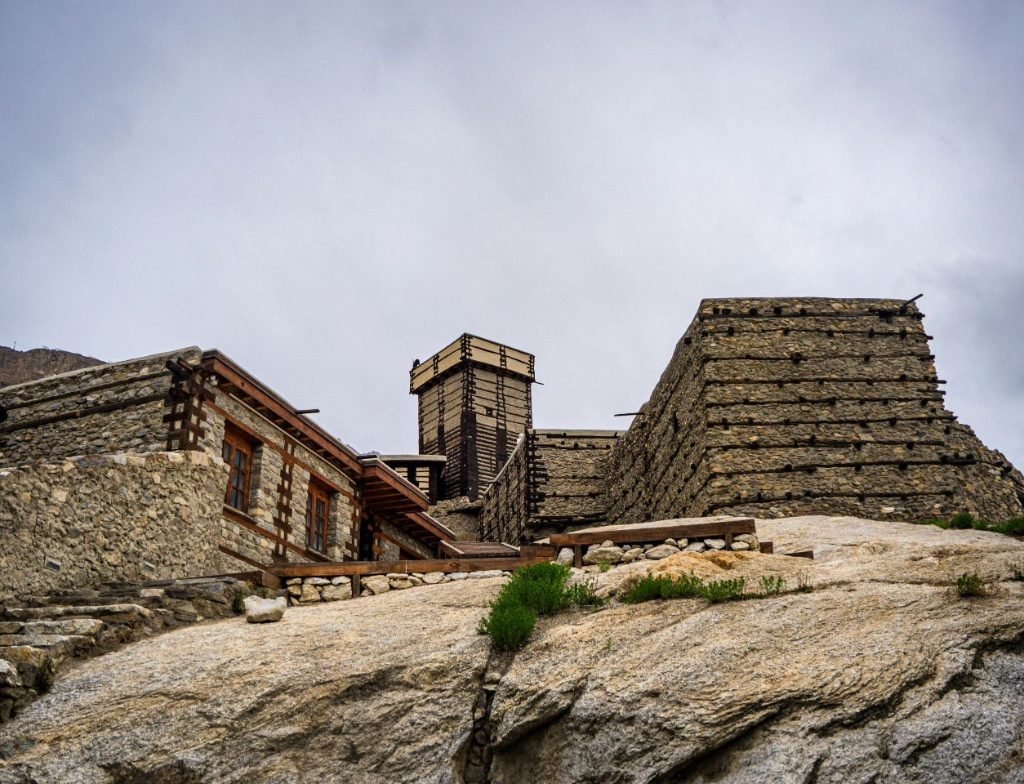
Altit Fort predates Baltit Fort by approximately 200 years, making it the oldest building in Hunza and one of the oldest surviving structures in Gilgit-Baltistan. The fort is located in the village of Altit below Karimabad and has also been extensively restored by the Aga Khan Trust for Culture. The surrounding Altit Heritage Village, a cluster of traditional stone and wood architecture surrounding the fort, has been preserved as a living community and provides the most complete picture available of what a traditional Hunza settlement looked like before modern construction materials arrived. Visiting Altit on a clear afternoon, when the light falls on the stone walls and the valley below is visible in full, is one of the most atmospherically complete experiences in Hunza.
Attabad Lake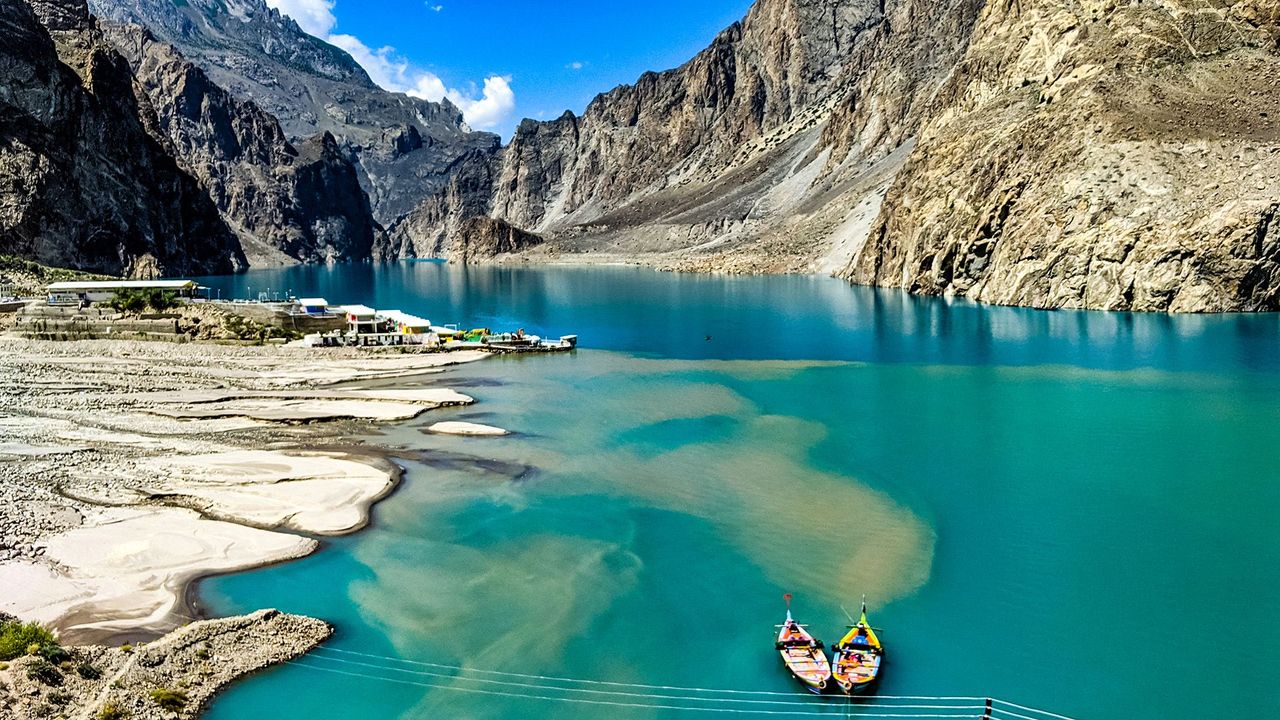
Attabad Lake is one of the most visually striking natural features in Gilgit-Baltistan, formed in January 2010 when a massive landslide blocked the Hunza River and submerged the village of Attabad and several kilometers of the Karakoram Highway under a lake that grew over the following months to over 20 kilometers in length. The color of the water, a vivid turquoise that comes from glacial mineral content, creates a visual contrast with the brown rock mountains surrounding it that is extraordinary by any standard. Boat rides on Attabad Lake are available from multiple jetty points along the highway, and the trip across the lake provides views that are impossible to access from the road. The submerged tops of trees and, in some conditions, the outline of the old highway beneath the water surface can still be seen from the boats. Attabad Lake is located on the Karakoram Highway approximately 30 kilometers beyond Karimabad toward Passu.
Passu Cones and Passu Village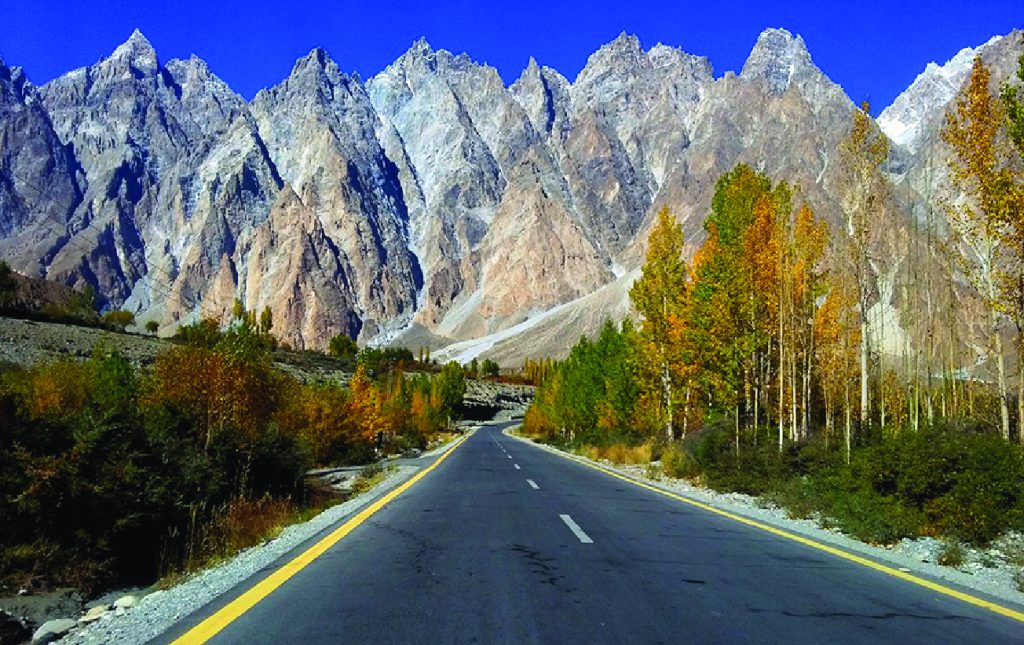
Passu is a small village in the upper Hunza Valley, approximately 85 kilometers from Karimabad, that sits at the base of one of the most extraordinary rock formations in the Karakoram. The Passu Cones, or Passu Cathedral as they are sometimes called, are a series of sharp rock spires rising from the valley floor to heights of over 6,000 meters in a cluster that looks, from the right angle and in the right light, like a Gothic cathedral rendered in rock on a planetary scale. The viewpoint from the suspension bridge near Passu village provides the classic photograph of the cones reflected in the Hunza River, and the walk across the suspension bridge itself is mildly nerve-inducing in a way that most visitors find adds to rather than detracts from the experience. The Batura Glacier, which stretches behind Passu village for over 56 kilometers, is one of the longest glaciers in the world outside the polar regions and can be approached on foot from the village.
Eagle’s Nest Viewpoint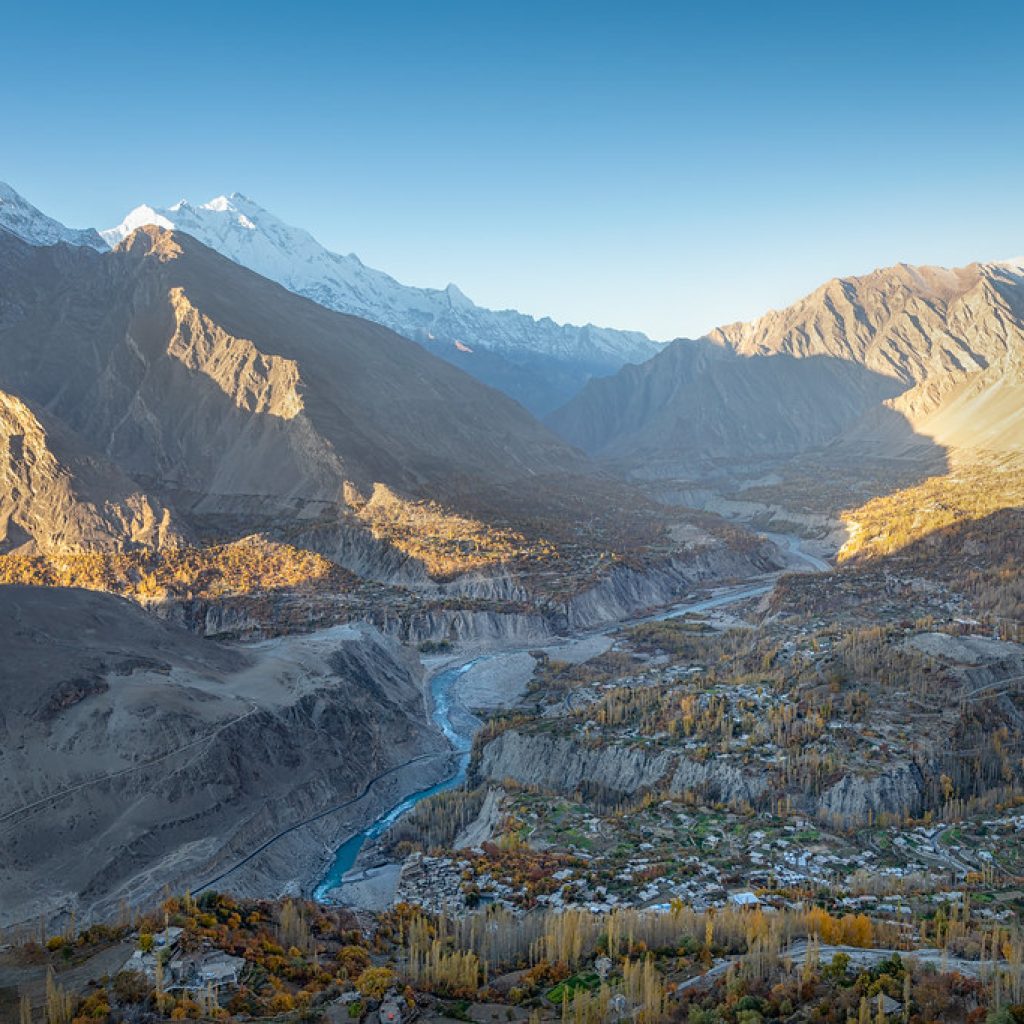
Eagle’s Nest, or Duikar, is a high point on the ridge above Karimabad at approximately 3,100 meters that provides the most comprehensive panoramic view of Hunza Valley available from any accessible location. The drive to Eagle’s Nest takes approximately 45 minutes by jeep from Karimabad on a rough track. The view from the top encompasses the full width of the Hunza Valley, the Rakaposhi massif to the south, the peaks of Ultar Sar and Lady Finger above Karimabad, and on clear days the more distant peaks of the Karakoram to the north. Sunrise and sunset from Eagle’s Nest, when the light transforms the color of the peaks progressively, are experiences that photographers return to Pakistan specifically to see.
Khunjerab Pass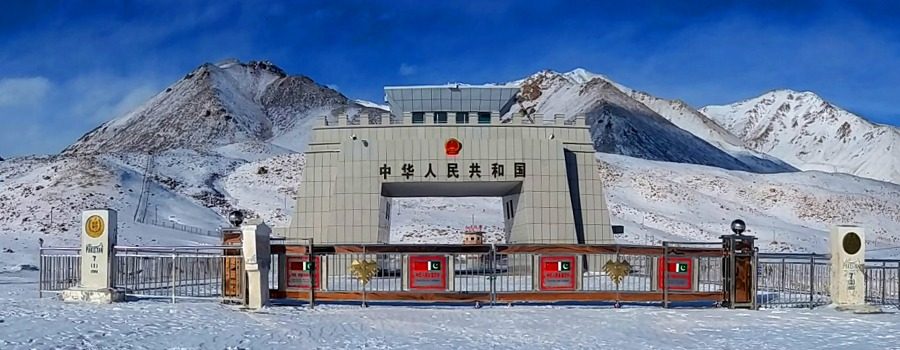
Khunjerab Pass at 4,693 meters above sea level is the highest paved international border crossing in the world, sitting at the point where Pakistan meets China at the northern end of the Karakoram Highway. The drive from Karimabad to Khunjerab takes approximately four to five hours one way, passing through the extraordinary landscape of the Khunjerab National Park where Marco Polo Sheep, Snow Leopard, and Himalayan Brown Bear inhabit a high-altitude plateau of sweeping, treeless terrain. The pass is open to visitors from May through November when the road is clear of snow. Standing at the Pakistan border post at Khunjerab, at nearly 5,000 meters in the shadow of the Central Asian steppes above, is one of the most geographically and emotionally significant experiences available on any Pakistan tour.
Hopper Glacier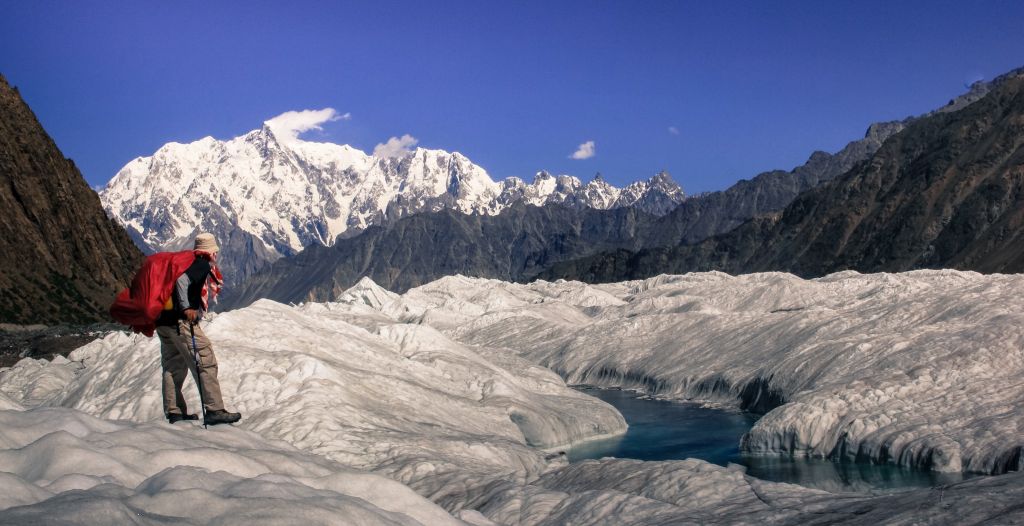
The Hopper Glacier near Nagar, across the Hunza River from Karimabad, is the most accessible glacier in the immediate Hunza area and provides a dramatic close-up encounter with the ice formations that characterize the Karakoram’s glacial landscape. The glacier’s snout reaches close to the valley floor and can be approached on foot from the road, with the cracking, groaning sound of the moving ice audible from a significant distance. A local guide from Nagar village accompanies most visits and provides both route knowledge and context about the glacier’s history and its visible recession in recent decades.
Ganish Village
Ganish, located just below the Karimabad turn-off on the Karakoram Highway, is one of the oldest continuously inhabited settlements in Hunza and holds a collection of traditional architecture, carved wooden mosques, and watchtowers that pre-dates the construction of Baltit and Altit forts by several centuries. The village has been designated a heritage area and its narrow lanes, traditional stone houses, and the Shahi Mosque with its extraordinarily carved wooden interior provide an architectural experience completely distinct from the more visited fort sites above.
Where to Stay in Hunza: Accommodation for Every Type of Traveler
Community Homestays with Perch Travels and Tours
The most rewarding accommodation experience in Hunza for travelers who want genuine cultural access is a community homestay arranged through Perch Travels and Tours’ Nomad Living Pakistan service. Staying with a local Hunza family provides home-cooked meals prepared from local ingredients including fresh bread, apricot products, walnut dishes, and seasonal vegetables, evening conversations that offer an honest and informed perspective on life in Hunza that no guidebook can replicate, access to the family’s community and daily rhythms, and the specific quality of welcome that Pakistani hospitality extends to guests in a domestic setting. Perch’s homestay properties are vetted and the families they work with are experienced with international visitors, which means the experience is both genuinely immersive and practically comfortable.
Guesthouses in Karimabad
Karimabad has a well-developed guesthouse culture shaped by decades of international trekking and tourism traffic. The best guesthouses in Karimabad offer private rooms with mountain views, reliable hot water, Wi-Fi in the main areas, and in-house restaurants serving a combination of Pakistani and international food. Prices for a good private room in a Karimabad guesthouse range from 3,000 to 10,000 rupees per night depending on the property and the season. The most celebrated guesthouse location in Karimabad is the Eagle’s Nest Hotel on the Duikar ridge above the town, which offers one of the most extraordinary lodging views of any property in Pakistan.
Mid-Range and Upscale Options
The Serena Hotel in Karimabad is the most upscale accommodation option in Hunza, offering rooms and suites in a property designed in the traditional Hunza architectural style with mountain views and a garden. For travelers who want a comfortable base with reliable facilities alongside genuine immersion in the Hunza environment, the Serena provides the right balance between quality and location.
Hunza Food: What to Eat During Your Tour to Hunza
The food of Hunza is one of the most distinctive regional cuisines in Pakistan and one that reflects the valley’s agricultural traditions and its position at high altitude with specific local produce unavailable elsewhere.
Chapshuro
Chapshuro is Hunza’s most famous bread preparation: a flatbread stuffed with spiced minced meat, onion, and herbs, sealed and baked on a flat iron pan until the exterior crisps and the interior filling cooks through. It is eaten as both a snack and a meal, and the best versions are made by families rather than commercial kitchens. A homestay in Hunza almost guarantees access to a genuinely good chapshuro.
Harissa
Harissa is a slow-cooked porridge of whole wheat grains and lamb or chicken, cooked together for several hours until both ingredients break down into a thick, deeply savory dish with a texture somewhere between porridge and stew. It is one of the most warming and sustaining preparations in Hunza’s cold mountain climate and is typically eaten in autumn and winter when the temperature drops.
Apricot Products
 Hunza’s apricots are its most famous agricultural product, and their derivatives are available in every form across the valley’s markets and guesthouses. Fresh apricots in season are eaten as fruit. Dried apricots are sold in multiple grades and varieties and are the most popular Hunza souvenir. Apricot oil, pressed from the kernel of the apricot stone, is used in cooking, as a skin moisturizer, and is sold commercially across Pakistan and internationally. Apricot jam, apricot leather, and apricot-based chutneys are all available and all worth tasting.
Walnut Products
Walnut trees are a defining feature of the Hunza landscape, and fresh and dried walnuts together with walnut oil are important components of the local diet and economy. Walnut bread, flatbreads enriched with chopped walnut, and dishes in which walnut sauce replaces meat as a protein source are specific to the Hunza tradition and unavailable in Pakistani cuisine elsewhere.
Tumuro Chai and Salted Tea
The tea culture of Hunza includes preparations not found in the rest of Pakistan. Tumuro chai is made from the berries of the sea buckthorn shrub, a tart and intensely orange-colored tea that is rich in Vitamin C and deeply associated with the valley. Salted tea, called noon chai in Urdu and specific to the Burusho tradition, is prepared with tea, milk, salt, and baking soda to produce a pink-colored, mildly salty beverage that surprises most visitors from outside the region and that many come to love over the course of a Hunza stay.
Practical Hunza Travel Tips
Carry cash before entering the Hunza Valley. ATMs in Karimabad are unreliable and in the upper valley settlements beyond Karimabad they are absent entirely. The nearest reliable banking is in Gilgit city.
Mobile connectivity in Hunza is available from most major Pakistani networks in Karimabad and on the main Karakoram Highway corridor, but signal drops in the side valleys and at higher elevations. Download offline maps before leaving Gilgit.
Pack layers regardless of the season. Hunza’s summer days are warm to hot in the valley, but temperatures drop significantly after sunset at 2,400 meters, and any excursion above the valley floor requires substantially warmer clothing. The Eagle’s Nest viewpoint and Khunjerab Pass are cold even in the height of summer.
Apply sunscreen consistently at Hunza’s altitude. UV intensity at 2,400 meters is significantly higher than at sea level, and the reflection from snow on the surrounding peaks amplifies exposure. Sunburn at altitude is rapid and can be severe.
Altitude adjustment is needed when traveling from Islamabad to Hunza directly. Most visitors acclimatize quickly at Hunza’s relatively modest altitude of 2,400 meters, but headaches on the first day are common. Rest, hydration, and a light first day in the valley resolve this for most travelers. For the Khunjerab Pass excursion at nearly 4,700 meters, proceed carefully if you are not yet acclimatized.
Respect the community’s social norms. Hunza is a progressive community relative to other parts of Pakistan but it is still a deeply rooted Ismaili Muslim culture with its own values and expectations. Modest dress, respectful behavior around religious sites and private homes, and sensitivity to local customs produce the quality of welcome that Hunza is famous for.
Plan Your Hunza Tour with Perch Travels and Tours
Perch Travels and Tours is a full-service travel and experiences company based in Islamabad, Pakistan, with deep roots in Hunza Valley specifically. Hunza is not simply one of the destinations they manage. It is the region from which the company draws its cultural knowledge and community relationships, and their operational presence in the valley means that a Hunza tour planned through Perch comes with the local access that independent travel cannot match.
Their Hunza tour packages cover the full range of itinerary types and durations. A short Hunza tour of four to five days covers Karimabad, Baltit and Altit forts, Attabad Lake, and Eagle’s Nest as a core circuit. An extended Hunza tour of seven to ten days adds Passu, the Batura Glacier, Khunjerab Pass, and a day trip to Shimshal or Hopper Glacier. A comprehensive Gilgit-Baltistan tour of fourteen days or more combines Hunza with Skardu, Fairy Meadows, and the Deosai Plateau as a complete northern Pakistan itinerary.
All Hunza tours arranged by Perch include domestic flight bookings or full KKH road journey management, ground transportation in appropriate 4×4 vehicles with professional drivers, accommodation at vetted guesthouses or community homestays, local guide support with genuine knowledge of the valley’s history, culture, and trekking routes, and the practical logistics support that makes the difference between a well-managed mountain trip and one that is spent solving problems rather than experiencing places.
Their Transportation Services handle all vehicle arrangements across the northern regions. Their Flight Services book the Islamabad-Gilgit domestic sector and all international connections. Their Nomad Living Pakistan service places travelers in the community homestays that provide the deepest and most rewarding human experience of Hunza available to any visitor.
Perch holds a 5.0 Google rating from over 24 verified clients and operates with the conviction that genuine access to a place, its communities, its food, and its landscape, is the highest form of luxury. Hunza is exactly the kind of destination their philosophy was built around.
Contact Perch Travels and Tours at contactus@perchtravelsandtours.com or visit perchtravelsandtours.com to plan your tour to Hunza.
Frequently Asked Questions About Hunza Tour Planning
When is the best time to take a tour to Hunza Valley?
The best time to visit Hunza depends on what you most want to experience. The blossom season in April and early May, when cherry and apricot trees flower simultaneously against the snow-covered peaks, is the most visually spectacular and most photographed period in the valley’s annual calendar. Accommodation books out early during blossom season and should be arranged at least two to three months in advance. The summer months of June through August are the most popular for all-round Hunza travel, with the best weather, full guesthouse capacity, abundant fresh fruit, and access to Khunjerab Pass and all upper valley destinations. September and October offer the autumn color of the poplar and fruit trees, lower visitor numbers, and some of the clearest mountain views of the year. Perch Travels and Tours advises on timing as part of every Hunza tour planning consultation and adjusts the itinerary to take full advantage of whichever season the traveler visits in.
How do you get to Hunza Valley from Islamabad?
There are two main ways to reach Hunza Valley from Islamabad. The first is a domestic flight from Islamabad to Gilgit Airport, operated by Pakistan International Airlines in approximately 45 minutes, followed by a two to two-and-a-half hour road journey from Gilgit to Karimabad in Hunza. This is the fastest option and the one recommended for travelers with limited time, though flights are subject to weather-related cancellations. The second is the overland Karakoram Highway drive, which covers approximately 450 kilometers from Islamabad to Karimabad in 10 to 14 hours and passes through some of the most dramatic mountain road scenery in the world. The KKH drive is itself one of the major experiences of a Pakistan tour and is strongly recommended for travelers who have the time to do it properly. Perch Travels and Tours manages both options, including the flight booking, airport transfers, and professional drivers for the road journey.
What are the most important places to visit during a Hunza tour?
The essential places to visit on a Hunza tour are Baltit Fort for its 700-plus years of history and its views across the valley, Altit Fort and the Altit Heritage Village for the most complete picture of traditional Hunza architecture and community life, Attabad Lake for its extraordinary turquoise color and the dramatic boat crossing, Passu Cones for one of the most striking natural rock formations in the Karakoram, Eagle’s Nest viewpoint above Karimabad for the panoramic valley view at sunrise or sunset, and Khunjerab Pass for the experience of standing at the highest paved international border crossing in the world. For travelers with additional time, Hopper Glacier near Nagar, Borith Lake near Passu, and the Shimshal Valley further up the highway provide experiences that add significant depth to the standard Hunza circuit. Perch Travels and Tours sequences all of these destinations efficiently within tour itineraries of varying lengths.
What do Perch Travels and Tours Hunza tour packages include?
Perch Travels and Tours Hunza tour packages are fully customized based on the traveler’s duration, budget, and specific interests, and include all elements of the trip from arrival to departure. A complete Hunza tour package with Perch covers domestic flight bookings or KKH road journey management with professional drivers, ground transportation in appropriate 4×4 vehicles throughout the Hunza Valley and upper valley excursions, accommodation at vetted guesthouses in Karimabad or community homestays with local families through their Nomad Living Pakistan service, local guide support with specific knowledge of the valley’s history, cultural heritage, and trekking routes, meals at the accommodation and guidance on the best local food experiences in Karimabad and the surrounding villages, and full practical support throughout the trip including itinerary adjustments for weather or road conditions. To discuss your specific Hunza tour requirements and receive a tailored itinerary, contact Perch Travels and Tours at contactus@perchtravelsandtours.com or visit perchtravelsandtours.com.