
Common Travel Mistakes to Avoid in 2026: A Complete Planning Guide for Travelers Visiting Pakistan
Every experienced traveler carries a mental list of things they wish they had done differently on earlier trips. The flights they booked too late. The itinerary they packed too tightly. The destination they did not research properly. The currency they forgot to carry. The local customs they unknowingly violated. These are not unusual failures. They are the normal learning curve of international travel, and the reason they keep happening to even experienced travelers is that each new destination introduces its own specific version of the same underlying mistakes.
This guide covers the most common travel mistakes that travelers make across the full spectrum of trip planning and execution, with specific attention to the mistakes most relevant to travel in Pakistan. It provides practical travel tips for avoiding each one, explains what is at stake when each mistake is made, and shows how Perch Travels and Tours provides the planning guidance and logistical support that prevents the most costly and most avoidable errors before they become problems.
If you are planning a trip to Pakistan or any significant international destination in 2026, this travel guide is the most useful thing you can read before you start booking.
Mistake One: Packing Too Much Into the Itinerary
This is the single most common travel mistake across every category of traveler, every destination, and every budget level. It is made by first-time travelers who want to see everything on a single trip and by experienced travelers who underestimate how long each element of a journey actually takes when you include transit time, adjustment time, and the spontaneous encounters that are often the best part of any trip.
An itinerary that is too full does not simply feel rushed. It produces a qualitatively worse experience at every stop because the traveler arrives tired, has too little time to settle, leaves before they have absorbed where they are, and spends mental energy managing the schedule rather than experiencing the destination. In Pakistan specifically, where road distances in the mountain regions take significantly longer than maps suggest and where weather, road conditions, or river flooding can delay transit by hours or days, an over-packed itinerary is the most reliable way to turn a Pakistan trip into a stress exercise.
The travel tip for avoiding this mistake is to plan for less than you think you can cover and trust that the destination will fill the remaining time with things you did not anticipate. A week in Hunza Valley with one or two sites per day, genuine meals, and unscheduled afternoon time produces a far richer experience than the same week attempting to cover Hunza, Skardu, Chitral, and Gilgit simultaneously.
Perch Travels and Tours calibrates itineraries specifically to the realistic pace of travel in each destination. Their planning guidance accounts for actual road times, weather contingencies, and the fact that a good travel experience needs breathing room built in rather than optimized out.
Mistake Two: Skipping Travel Insurance
Travel insurance sits in the category of things that feel unnecessary until the moment they become essential, and in that moment their absence is catastrophic in a way that is entirely avoidable. Travelers who skip insurance typically do so for one of three reasons: it feels expensive, they are confident nothing will go wrong, or they defer the purchase until it slips off the list entirely.
The financial reality of medical emergencies without travel insurance is one of the most important travel tips any guide can provide. A medical evacuation from a remote mountain region in Gilgit-Baltistan by helicopter, which is the only option in a serious emergency given the terrain, can cost tens of thousands of dollars without insurance. Trip cancellation due to illness before departure, for a family of four with flights and accommodation already booked, can represent thousands of pounds or dollars in unrecoverable costs without trip cancellation coverage. Lost luggage on international flights, delayed connections that cause missed onward bookings, and even relatively minor medical treatment in a private clinic at a destination can all produce costs that dwarf the premium of a good travel insurance policy.
For travel in Pakistan specifically, travel insurance with medical evacuation coverage is not optional for responsible planning. The mountain environments of the north, where the most extraordinary travel experiences in the country are concentrated, are also the environments where physical accidents and altitude-related medical needs occur and where access to medical facilities requires air evacuation. Perch Travels and Tours advises all clients on travel insurance requirements as part of the initial planning consultation and provides guidance on the coverage most relevant to the specific destinations and activities in the client’s itinerary.
Mistake Three: Booking Accommodation at the Last Minute
The accommodation market in Pakistan’s most popular destinations, particularly Hunza Valley during blossom season in April and May, Naran during summer weekends, and Skardu during the peak trekking season of June through August, operates on limited supply. The best guesthouses in Karimabad, the most sought-after community homestays in Chitral, and the family rooms at well-located properties across the northern mountain regions book out weeks and sometimes months in advance during peak periods.
Travelers who arrive in these destinations without confirmed bookings find themselves either in the accommodation of last resort, which is significantly lower quality and often poorly located, or spending hours of their limited trip time trying to find a bed. In mountain regions where there is limited mobile connectivity, the situation is compounded by the difficulty of making alternative arrangements in real time.
The travel tip for avoiding this mistake is simple: book accommodation as early as the rest of the trip is confirmed and use a local operator who has established relationships with the best properties in each destination. Perch Travels and Tours selects and books accommodation across all their Pakistan destinations based on their direct knowledge of each property, including family suitability, food quality, view, management standards, and location relative to the day’s activities.
Mistake Four: Ignoring Local Customs and Cultural Context
Cultural mistakes in travel range from mildly awkward to genuinely offensive, and in a country like Pakistan where hospitality is a deep cultural value, the most common response to an inadvertent cultural mistake is not hostility but a slightly strained attempt by the local person to be polite about something that has made them uncomfortable. The traveler may not even notice the problem. But the quality of the human encounter, which is the richest thing Pakistan travel offers, is diminished.
The most significant cultural consideration for travel in Pakistan is dress. Modest dress across the country and particularly in conservative communities, religious sites, and rural areas is not a suggestion. It is a genuine expression of respect that is received with corresponding warmth when observed and that, when absent, creates social friction that makes every interaction slightly more guarded. Female travelers in particular benefit significantly from wearing a shalwar kameez and carrying a dupatta, which functions as a cultural signal of awareness and respect that opens social doors.
Secondary cultural considerations include understanding that photography of people requires consent and that consent in conservative communities is best sought indirectly through a local guide rather than by pointing a camera. Understanding that private spaces and religious spaces have their own entry protocols. And understanding that the quality of Pakistani hospitality, particularly the offer of food and tea, is best received by accepting rather than declining.
Perch Travels and Tours prepares clients for the cultural context of each destination they visit as a standard part of their pre-trip guidance, which means their clients arrive in Pakistan already knowing what to expect and how to respond in the situations most likely to arise.
Mistake Five: Underestimating Travel Distances and Times in Pakistan
Pakistan is a large country with challenging terrain in its most visited regions, and the relationship between distance on a map and time on the road is significantly different here than in most countries where travelers have developed their distance intuitions.
The Karakoram Highway from Islamabad to Hunza covers approximately 450 kilometers. In a country with motorway-grade infrastructure, this would be a four-hour drive. On the KKH, which passes through mountain terrain, crosses multiple rivers, and is subject to seasonal rockfalls and road damage, it typically takes between 10 and 14 hours. The road from Gilgit to Skardu is 178 kilometers and takes approximately four to five hours. The track to Fairy Meadows from the Karakoram Highway, a distance of only a few kilometers, involves a combination of the steepest road in Pakistan by jeep and a two-hour walk, and takes the better part of a morning.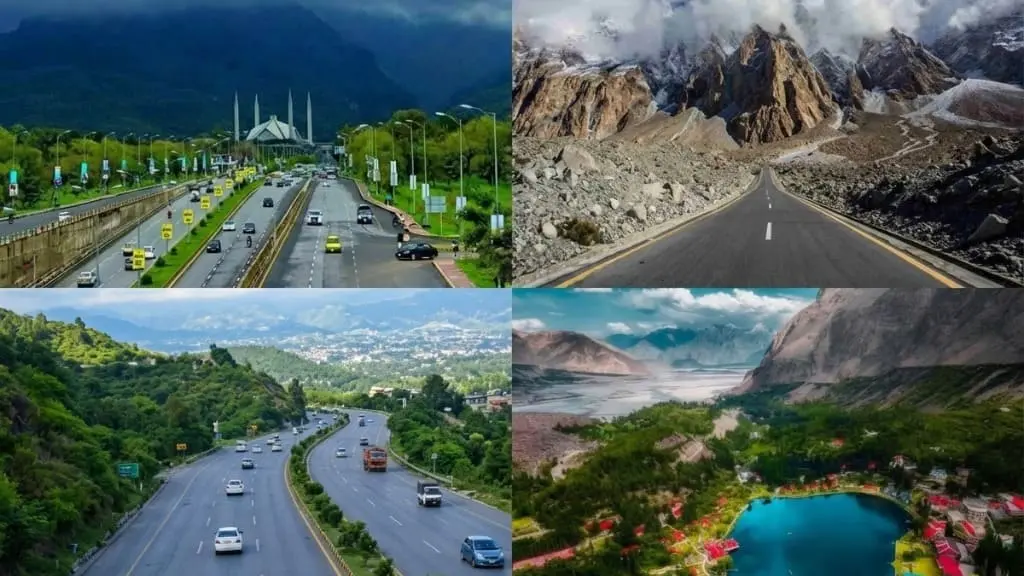
Travelers who build their Pakistan itinerary using standard distance-to-time assumptions find themselves chronically behind schedule, arriving at destinations after dark, missing the morning light they planned to photograph, and rushing through experiences that deserved more time. The travel tip is to research road times specifically rather than distances, and to add 30 to 50 percent buffer to any time estimate found online, particularly for routes in Gilgit-Baltistan and Khyber Pakhtunkhwa where road conditions vary considerably by season.
Perch Travels and Tours builds all itinerary timing around actual ground experience rather than map distances, which means that drive times in their itineraries reflect reality and the day’s schedule is achievable rather than theoretical.
Mistake Six: Not Carrying Local Currency
Pakistan is predominantly a cash economy. While mobile payment systems and card readers are increasingly available in Islamabad and Lahore, they are sporadic in smaller cities, absent in mountain villages, and entirely unavailable in the remote destinations that make Pakistan travel extraordinary. ATMs in the northern mountain regions are unreliable and in locations such as Chitral, the Kalash valleys, Skardu’s outlying areas, and the Makran Coast, they are completely absent.
Travelers who arrive in Hunza or Chitral expecting to manage with a card find themselves unable to pay for guesthouses, food, local guides, jeep hires, or the craft and dried fruit purchases that are among the most rewarding commercial interactions of a Pakistan trip. The only reliable solution is to carry adequate local currency in Pakistani rupees from Islamabad or Gilgit before entering the mountain regions.
Practical guidance on how much to carry depends on the itinerary. A week in the Hunza Valley for two people, covering accommodation, food, transport, and reasonable shopping, requires approximately 50,000 to 100,000 rupees in cash. Perch Travels and Tours advises all clients on cash requirements as part of pre-trip planning guidance, with specific recommendations based on the destinations and duration of each itinerary.
Mistake Seven: Over-Relying on Online Reviews for Accommodation Decisions
Online reviews of accommodation in Pakistan’s mountain regions have two significant limitations that experienced travelers and local operators are aware of but that first-time visitors often discover only after the fact.
The first limitation is that the review pool for most guesthouses in locations like Karimabad, Skardu, or Chitral is small enough that a few enthusiastic or disappointed reviewers can significantly skew the average rating in either direction. A guesthouse with twelve reviews and a four-star average is statistically much less reliable as a quality indicator than a city hotel with four hundred reviews at the same average.
The second limitation is that reviews typically reflect the experience of a specific season, a specific staff configuration, or a specific room that may no longer represent what a new visitor will encounter. Guesthouse quality in the northern regions is particularly variable because the best properties are family-run operations where the experience depends heavily on whether the family is in residence, whether the cook who earned the reviews is still working there, and whether the property has been maintained since the most recent reviews were written.
Perch Travels and Tours selects accommodation based on direct and current knowledge of each property, which means the quality assurance they provide is grounded in recent personal experience rather than a historical review average.
Mistake Eight: Not Having a Local Contact or Ground Support
The most consistently undervalued travel tip for international travel, and particularly for travel in Pakistan, is the value of having a trusted local contact who can be reached throughout the trip. This is not the same as booking a tour. It is the more specific value of knowing that if the jeep breaks down on the road to Khunjerab, if the weather closes Skardu Airport and the flight is cancelled, if a guest gets ill in a remote village, or if a guesthouse turns out not to have the booking that was confirmed online, there is a person with local knowledge and ground relationships who can solve the problem in real time.
Independent travelers in Pakistan frequently encounter situations where the solution to a logistical problem requires knowledge of which person to call, which alternative exists, and what the local workaround for a standard travel disruption looks like. Without that knowledge, problems that are easily solvable for a local operator become hours of stressful improvisation for an independent traveler.
Perch Travels and Tours provides on-ground support throughout all itineraries they manage, which means their clients have a contact who can be reached throughout the trip for guidance, problem-solving, and itinerary adjustment when circumstances require it.
Pakistan-Specific Travel Mistakes Worth Addressing Separately
Several travel mistakes are particularly relevant to Pakistan and worth addressing specifically for travelers planning their first or second visit to the country.
Assuming connectivity across the country. Mobile data and voice coverage in Pakistan is reliable in Islamabad, Lahore, and along the Karakoram Highway to a point. It becomes patchy in the side valleys of Gilgit-Baltistan and absent in many of the most remote and most rewarding destinations. Downloading offline maps, important booking confirmations, and essential contact numbers before leaving areas of good connectivity is essential rather than optional.
Underestimating altitude effects. Many of Pakistan’s most visited destinations sit at significant altitude, and the health effects of altitude are not limited to the highest trekking routes. Karimabad in Hunza is at 2,400 meters. Fairy Meadows is at 3,300 meters. The Deosai Plateau averages 4,100 meters. Khunjerab Pass is at 4,693 meters. Headaches, fatigue, and reduced appetite are common at these elevations for travelers arriving from sea level, and ignoring early altitude symptoms can progress to more serious altitude sickness. Rest, hydration, and a gradual ascent profile prevent most problems.
Not confirming the status of mountain roads and passes before travel. Roads in Pakistan’s northern regions are affected by seasonal closures, monsoon damage, and occasional landslides that can change conditions rapidly. A road that was open last week may be closed this week. Khunjerab Pass has a specific annual opening and closing schedule that affects travelers on the northern Hunza circuit. Confirming road status with a local operator before each leg of a mountain itinerary prevents the situation of arriving at a closed road with no alternative plan.
Visiting during festivals without advance planning. Pakistan’s festival periods including Eid al-Fitr and Eid al-Adha are wonderful times to experience Pakistani culture and hospitality but they are also periods when domestic travel surges, accommodation in mountain destinations fills completely, and transport becomes harder to arrange. Planning a trip that coincides with a major festival requires accommodation booking significantly further in advance than a non-festival visit.
How Perch Travels and Tours Helps Travelers Avoid These Mistakes
Perch Travels and Tours exists to ensure that the travelers they work with arrive in Pakistan prepared, supported, and free to experience the country rather than manage its logistical challenges.
Their pre-trip planning guidance covers all of the areas described in this travel guide. Itinerary pacing is designed around realistic travel times and genuine experience quality rather than maximum destination coverage. Accommodation is selected and booked through their direct relationships with the best properties in each region. Travel insurance guidance is provided at the start of every engagement. Local currency requirements are communicated in advance for every leg of the itinerary. Cultural preparation is part of the standard pre-trip briefing.
During the trip, their Transportation Services provide professional drivers in appropriate vehicles who know the road conditions in each region and can navigate alternatives when conditions require it. Their Nomad Living Pakistan community homestays in Hunza, Chitral, Skardu, Swat, and beyond provide accommodation that is vetted, culturally appropriate, and selected with specific knowledge of what each family can offer a visiting traveler. Their local guide network across Pakistan’s mountain and cultural destinations provides the human knowledge that turns a visit to a site into a genuine understanding of it.
For travelers in Pakistan who encounter a problem during their trip, Perch’s on-ground team provides the local contact and problem-solving capacity that independent travelers consistently describe as the thing they most wished they had arranged before leaving home.
Perch Travels and Tours holds a 5.0 Google rating from over 24 verified clients and has served travelers from Pakistan, the UAE, the United Kingdom, Germany, the United States, and Australia since their founding in 2024. Their philosophy, that genuine access and a quality of experience that earns its place in memory, is exactly the opposite of what common travel mistakes produce.
Contact Perch Travels and Tours at contactus@perchtravelsandtours.com or visit perchtravelsandtours.com to plan a Pakistan trip that avoids every mistake covered in this guide.
Frequently Asked Questions About Travel Mistakes and Planning a Trip to Pakistan
What are the most common travel mistakes first-time visitors to Pakistan make?
The most common travel mistakes first-time visitors to Pakistan make fall into five categories. The first is over-packing the itinerary by underestimating how long road journeys take in the mountain regions and leaving no buffer time for the spontaneous experiences that are often the most memorable part of any Pakistan trip. The second is not carrying sufficient local currency before leaving the cities, since ATMs are unreliable or absent in most mountain destinations. The third is skipping travel insurance or purchasing inadequate coverage, which in a country where medical evacuation from remote mountain terrain can cost tens of thousands of dollars without insurance is a serious financial risk. The fourth is booking accommodation at the last minute during peak seasons when the best properties are fully reserved weeks or months in advance. The fifth is arriving without cultural preparation, particularly around dress and photography etiquette, which affects the quality of human encounter that is Pakistan’s most distinctive travel offering. Perch Travels and Tours addresses all five of these through their pre-trip planning guidance and on-ground support services.
How do you avoid making travel mistakes when planning a trip to Pakistan?
The most reliable way to avoid travel mistakes when planning a trip to Pakistan is to work with a local operator who has direct operational knowledge of the country’s specific logistical challenges and cultural context. General travel planning principles, such as booking early, purchasing travel insurance, and researching the destination, all apply. But Pakistan-specific knowledge, including which mountain roads take far longer than maps suggest, which destinations require cash planning in advance, how to dress appropriately for different communities across the country, and what to do when a flight to Skardu or Gilgit is cancelled by weather, requires the kind of ground experience that a professional operator like Perch Travels and Tours provides and that most travelers do not have before their first visit.
What travel tips are most important for first-time travelers in Pakistan?
The most important travel tips for first-time travelers in Pakistan are to dress modestly throughout the country and carry a dupatta or shawl for religious and more conservative community settings, to carry adequate cash in Pakistani rupees before leaving Islamabad or Gilgit for the mountain regions, to download offline maps and essential contact information before entering areas of limited connectivity, to build genuine buffer time into every day of the itinerary to account for road conditions and the spontaneous quality of human encounter that makes Pakistan travel rewarding, to purchase comprehensive travel insurance with medical evacuation coverage before departure, and to have a trusted local contact or operator who can be reached throughout the trip for guidance and problem-solving. These tips apply across all Pakistan travel but are most critical for the northern mountain regions where the distances are greater, the infrastructure is less predictable, and the experiences available are most profoundly rewarding.
Can Perch Travels and Tours help travelers who have made mistakes during a Pakistan trip?
Yes. Perch Travels and Tours provides on-ground support throughout all itineraries they manage, and their team can assist with a wide range of situations that arise during a trip including alternative accommodation when a booking is not honored, alternative transport when a vehicle breaks down or a road is closed, guidance on the nearest medical facilities in remote regions, itinerary adjustments when weather or road conditions make the original plan impractical, and logistical problem-solving for the situations that no amount of pre-trip planning can fully anticipate. For travelers who are already in Pakistan and have encountered a problem regardless of whether they booked through Perch, contacting the team directly via contactus@perchtravelsandtours.com or through the website at perchtravelsandtours.com is the fastest way to access local knowledge and practical support.
Common Travel Mistakes to Avoid in 2026: A Complete Planning Guide for Travelers Visiting Pakistan
Every experienced traveler carries a mental list of things they wish they had done differently on earlier trips. The flights they booked too late. The itinerary they packed too tightly. The destination they did not research properly. The currency they forgot to carry. The local customs they unknowingly violated. These are not unusual failures. They are the normal learning curve of international travel, and the reason they keep happening to even experienced travelers is that each new destination introduces its own specific version of the same underlying mistakes.
This guide covers the most common travel mistakes that travelers make across the full spectrum of trip planning and execution, with specific attention to the mistakes most relevant to travel in Pakistan. It provides practical travel tips for avoiding each one, explains what is at stake when each mistake is made, and shows how Perch Travels and Tours provides the planning guidance and logistical support that prevents the most costly and most avoidable errors before they become problems.
If you are planning a trip to Pakistan or any significant international destination in 2026, this travel guide is the most useful thing you can read before you start booking.
Mistake One: Packing Too Much Into the Itinerary
This is the single most common travel mistake across every category of traveler, every destination, and every budget level. It is made by first-time travelers who want to see everything on a single trip and by experienced travelers who underestimate how long each element of a journey actually takes when you include transit time, adjustment time, and the spontaneous encounters that are often the best part of any trip.
An itinerary that is too full does not simply feel rushed. It produces a qualitatively worse experience at every stop because the traveler arrives tired, has too little time to settle, leaves before they have absorbed where they are, and spends mental energy managing the schedule rather than experiencing the destination. In Pakistan specifically, where road distances in the mountain regions take significantly longer than maps suggest and where weather, road conditions, or river flooding can delay transit by hours or days, an over-packed itinerary is the most reliable way to turn a Pakistan trip into a stress exercise.
The travel tip for avoiding this mistake is to plan for less than you think you can cover and trust that the destination will fill the remaining time with things you did not anticipate. A week in Hunza Valley with one or two sites per day, genuine meals, and unscheduled afternoon time produces a far richer experience than the same week attempting to cover Hunza, Skardu, Chitral, and Gilgit simultaneously.
Perch Travels and Tours calibrates itineraries specifically to the realistic pace of travel in each destination. Their planning guidance accounts for actual road times, weather contingencies, and the fact that a good travel experience needs breathing room built in rather than optimized out.
Mistake Two: Skipping Travel Insurance
Travel insurance sits in the category of things that feel unnecessary until the moment they become essential, and in that moment their absence is catastrophic in a way that is entirely avoidable. Travelers who skip insurance typically do so for one of three reasons: it feels expensive, they are confident nothing will go wrong, or they defer the purchase until it slips off the list entirely.
The financial reality of medical emergencies without travel insurance is one of the most important travel tips any guide can provide. A medical evacuation from a remote mountain region in Gilgit-Baltistan by helicopter, which is the only option in a serious emergency given the terrain, can cost tens of thousands of dollars without insurance. Trip cancellation due to illness before departure, for a family of four with flights and accommodation already booked, can represent thousands of pounds or dollars in unrecoverable costs without trip cancellation coverage. Lost luggage on international flights, delayed connections that cause missed onward bookings, and even relatively minor medical treatment in a private clinic at a destination can all produce costs that dwarf the premium of a good travel insurance policy.
For travel in Pakistan specifically, travel insurance with medical evacuation coverage is not optional for responsible planning. The mountain environments of the north, where the most extraordinary travel experiences in the country are concentrated, are also the environments where physical accidents and altitude-related medical needs occur and where access to medical facilities requires air evacuation. Perch Travels and Tours advises all clients on travel insurance requirements as part of the initial planning consultation and provides guidance on the coverage most relevant to the specific destinations and activities in the client’s itinerary.
Mistake Three: Booking Accommodation at the Last Minute
The accommodation market in Pakistan’s most popular destinations, particularly Hunza Valley during blossom season in April and May, Naran during summer weekends, and Skardu during the peak trekking season of June through August, operates on limited supply. The best guesthouses in Karimabad, the most sought-after community homestays in Chitral, and the family rooms at well-located properties across the northern mountain regions book out weeks and sometimes months in advance during peak periods.
Travelers who arrive in these destinations without confirmed bookings find themselves either in the accommodation of last resort, which is significantly lower quality and often poorly located, or spending hours of their limited trip time trying to find a bed. In mountain regions where there is limited mobile connectivity, the situation is compounded by the difficulty of making alternative arrangements in real time.
The travel tip for avoiding this mistake is simple: book accommodation as early as the rest of the trip is confirmed and use a local operator who has established relationships with the best properties in each destination. Perch Travels and Tours selects and books accommodation across all their Pakistan destinations based on their direct knowledge of each property, including family suitability, food quality, view, management standards, and location relative to the day’s activities.
Mistake Four: Ignoring Local Customs and Cultural Context
Cultural mistakes in travel range from mildly awkward to genuinely offensive, and in a country like Pakistan where hospitality is a deep cultural value, the most common response to an inadvertent cultural mistake is not hostility but a slightly strained attempt by the local person to be polite about something that has made them uncomfortable. The traveler may not even notice the problem. But the quality of the human encounter, which is the richest thing Pakistan travel offers, is diminished.
The most significant cultural consideration for travel in Pakistan is dress. Modest dress across the country and particularly in conservative communities, religious sites, and rural areas is not a suggestion. It is a genuine expression of respect that is received with corresponding warmth when observed and that, when absent, creates social friction that makes every interaction slightly more guarded. Female travelers in particular benefit significantly from wearing a shalwar kameez and carrying a dupatta, which functions as a cultural signal of awareness and respect that opens social doors.
Secondary cultural considerations include understanding that photography of people requires consent and that consent in conservative communities is best sought indirectly through a local guide rather than by pointing a camera. Understanding that private spaces and religious spaces have their own entry protocols. And understanding that the quality of Pakistani hospitality, particularly the offer of food and tea, is best received by accepting rather than declining.
Perch Travels and Tours prepares clients for the cultural context of each destination they visit as a standard part of their pre-trip guidance, which means their clients arrive in Pakistan already knowing what to expect and how to respond in the situations most likely to arise.
Mistake Five: Underestimating Travel Distances and Times in Pakistan
Pakistan is a large country with challenging terrain in its most visited regions, and the relationship between distance on a map and time on the road is significantly different here than in most countries where travelers have developed their distance intuitions.
The Karakoram Highway from Islamabad to Hunza covers approximately 450 kilometers. In a country with motorway-grade infrastructure, this would be a four-hour drive. On the KKH, which passes through mountain terrain, crosses multiple rivers, and is subject to seasonal rockfalls and road damage, it typically takes between 10 and 14 hours. The road from Gilgit to Skardu is 178 kilometers and takes approximately four to five hours. The track to Fairy Meadows from the Karakoram Highway, a distance of only a few kilometers, involves a combination of the steepest road in Pakistan by jeep and a two-hour walk, and takes the better part of a morning.
Travelers who build their Pakistan itinerary using standard distance-to-time assumptions find themselves chronically behind schedule, arriving at destinations after dark, missing the morning light they planned to photograph, and rushing through experiences that deserved more time. The travel tip is to research road times specifically rather than distances, and to add 30 to 50 percent buffer to any time estimate found online, particularly for routes in Gilgit-Baltistan and Khyber Pakhtunkhwa where road conditions vary considerably by season.
Perch Travels and Tours builds all itinerary timing around actual ground experience rather than map distances, which means that drive times in their itineraries reflect reality and the day’s schedule is achievable rather than theoretical.
Mistake Six: Not Carrying Local Currency
Pakistan is predominantly a cash economy. While mobile payment systems and card readers are increasingly available in Islamabad and Lahore, they are sporadic in smaller cities, absent in mountain villages, and entirely unavailable in the remote destinations that make Pakistan travel extraordinary. ATMs in the northern mountain regions are unreliable and in locations such as Chitral, the Kalash valleys, Skardu’s outlying areas, and the Makran Coast, they are completely absent.
Travelers who arrive in Hunza or Chitral expecting to manage with a card find themselves unable to pay for guesthouses, food, local guides, jeep hires, or the craft and dried fruit purchases that are among the most rewarding commercial interactions of a Pakistan trip. The only reliable solution is to carry adequate local currency in Pakistani rupees from Islamabad or Gilgit before entering the mountain regions.
Practical guidance on how much to carry depends on the itinerary. A week in the Hunza Valley for two people, covering accommodation, food, transport, and reasonable shopping, requires approximately 50,000 to 100,000 rupees in cash. Perch Travels and Tours advises all clients on cash requirements as part of pre-trip planning guidance, with specific recommendations based on the destinations and duration of each itinerary.
Mistake Seven: Over-Relying on Online Reviews for Accommodation Decisions
Online reviews of accommodation in Pakistan’s mountain regions have two significant limitations that experienced travelers and local operators are aware of but that first-time visitors often discover only after the fact.
The first limitation is that the review pool for most guesthouses in locations like Karimabad, Skardu, or Chitral is small enough that a few enthusiastic or disappointed reviewers can significantly skew the average rating in either direction. A guesthouse with twelve reviews and a four-star average is statistically much less reliable as a quality indicator than a city hotel with four hundred reviews at the same average.
The second limitation is that reviews typically reflect the experience of a specific season, a specific staff configuration, or a specific room that may no longer represent what a new visitor will encounter. Guesthouse quality in the northern regions is particularly variable because the best properties are family-run operations where the experience depends heavily on whether the family is in residence, whether the cook who earned the reviews is still working there, and whether the property has been maintained since the most recent reviews were written.
Perch Travels and Tours selects accommodation based on direct and current knowledge of each property, which means the quality assurance they provide is grounded in recent personal experience rather than a historical review average.
Mistake Eight: Not Having a Local Contact or Ground Support
The most consistently undervalued travel tip for international travel, and particularly for travel in Pakistan, is the value of having a trusted local contact who can be reached throughout the trip. This is not the same as booking a tour. It is the more specific value of knowing that if the jeep breaks down on the road to Khunjerab, if the weather closes Skardu Airport and the flight is cancelled, if a guest gets ill in a remote village, or if a guesthouse turns out not to have the booking that was confirmed online, there is a person with local knowledge and ground relationships who can solve the problem in real time.
Independent travelers in Pakistan frequently encounter situations where the solution to a logistical problem requires knowledge of which person to call, which alternative exists, and what the local workaround for a standard travel disruption looks like. Without that knowledge, problems that are easily solvable for a local operator become hours of stressful improvisation for an independent traveler.
Perch Travels and Tours provides on-ground support throughout all itineraries they manage, which means their clients have a contact who can be reached throughout the trip for guidance, problem-solving, and itinerary adjustment when circumstances require it.
Pakistan-Specific Travel Mistakes Worth Addressing Separately
Several travel mistakes are particularly relevant to Pakistan and worth addressing specifically for travelers planning their first or second visit to the country.
Assuming connectivity across the country. Mobile data and voice coverage in Pakistan is reliable in Islamabad, Lahore, and along the Karakoram Highway to a point. It becomes patchy in the side valleys of Gilgit-Baltistan and absent in many of the most remote and most rewarding destinations. Downloading offline maps, important booking confirmations, and essential contact numbers before leaving areas of good connectivity is essential rather than optional.
Underestimating altitude effects. Many of Pakistan’s most visited destinations sit at significant altitude, and the health effects of altitude are not limited to the highest trekking routes. Karimabad in Hunza is at 2,400 meters. Fairy Meadows is at 3,300 meters. The Deosai Plateau averages 4,100 meters. Khunjerab Pass is at 4,693 meters. Headaches, fatigue, and reduced appetite are common at these elevations for travelers arriving from sea level, and ignoring early altitude symptoms can progress to more serious altitude sickness. Rest, hydration, and a gradual ascent profile prevent most problems.
Not confirming the status of mountain roads and passes before travel. Roads in Pakistan’s northern regions are affected by seasonal closures, monsoon damage, and occasional landslides that can change conditions rapidly. A road that was open last week may be closed this week. Khunjerab Pass has a specific annual opening and closing schedule that affects travelers on the northern Hunza circuit. Confirming road status with a local operator before each leg of a mountain itinerary prevents the situation of arriving at a closed road with no alternative plan.
Visiting during festivals without advance planning. Pakistan’s festival periods including Eid al-Fitr and Eid al-Adha are wonderful times to experience Pakistani culture and hospitality but they are also periods when domestic travel surges, accommodation in mountain destinations fills completely, and transport becomes harder to arrange. Planning a trip that coincides with a major festival requires accommodation booking significantly further in advance than a non-festival visit.
How Perch Travels and Tours Helps Travelers Avoid These Mistakes
Perch Travels and Tours exists to ensure that the travelers they work with arrive in Pakistan prepared, supported, and free to experience the country rather than manage its logistical challenges.
Their pre-trip planning guidance covers all of the areas described in this travel guide. Itinerary pacing is designed around realistic travel times and genuine experience quality rather than maximum destination coverage. Accommodation is selected and booked through their direct relationships with the best properties in each region. Travel insurance guidance is provided at the start of every engagement. Local currency requirements are communicated in advance for every leg of the itinerary. Cultural preparation is part of the standard pre-trip briefing.
During the trip, their Transportation Services provide professional drivers in appropriate vehicles who know the road conditions in each region and can navigate alternatives when conditions require it. Their Nomad Living Pakistan community homestays in Hunza, Chitral, Skardu, Swat, and beyond provide accommodation that is vetted, culturally appropriate, and selected with specific knowledge of what each family can offer a visiting traveler. Their local guide network across Pakistan’s mountain and cultural destinations provides the human knowledge that turns a visit to a site into a genuine understanding of it.
For travelers in Pakistan who encounter a problem during their trip, Perch’s on-ground team provides the local contact and problem-solving capacity that independent travelers consistently describe as the thing they most wished they had arranged before leaving home.
Perch Travels and Tours holds a 5.0 Google rating from over 24 verified clients and has served travelers from Pakistan, the UAE, the United Kingdom, Germany, the United States, and Australia since their founding in 2024. Their philosophy, that genuine access and a quality of experience that earns its place in memory, is exactly the opposite of what common travel mistakes produce.
Contact Perch Travels and Tours at contactus@perchtravelsandtours.com or visit perchtravelsandtours.com to plan a Pakistan trip that avoids every mistake covered in this guide.
Frequently Asked Questions About Travel Mistakes and Planning a Trip to Pakistan
What are the most common travel mistakes first-time visitors to Pakistan make?
The most common travel mistakes first-time visitors to Pakistan make fall into five categories. The first is over-packing the itinerary by underestimating how long road journeys take in the mountain regions and leaving no buffer time for the spontaneous experiences that are often the most memorable part of any Pakistan trip. The second is not carrying sufficient local currency before leaving the cities, since ATMs are unreliable or absent in most mountain destinations. The third is skipping travel insurance or purchasing inadequate coverage, which in a country where medical evacuation from remote mountain terrain can cost tens of thousands of dollars without insurance is a serious financial risk. The fourth is booking accommodation at the last minute during peak seasons when the best properties are fully reserved weeks or months in advance. The fifth is arriving without cultural preparation, particularly around dress and photography etiquette, which affects the quality of human encounter that is Pakistan’s most distinctive travel offering. Perch Travels and Tours addresses all five of these through their pre-trip planning guidance and on-ground support services.
How do you avoid making travel mistakes when planning a trip to Pakistan?
The most reliable way to avoid travel mistakes when planning a trip to Pakistan is to work with a local operator who has direct operational knowledge of the country’s specific logistical challenges and cultural context. General travel planning principles, such as booking early, purchasing travel insurance, and researching the destination, all apply. But Pakistan-specific knowledge, including which mountain roads take far longer than maps suggest, which destinations require cash planning in advance, how to dress appropriately for different communities across the country, and what to do when a flight to Skardu or Gilgit is cancelled by weather, requires the kind of ground experience that a professional operator like Perch Travels and Tours provides and that most travelers do not have before their first visit.
What travel tips are most important for first-time travelers in Pakistan?
The most important travel tips for first-time travelers in Pakistan are to dress modestly throughout the country and carry a dupatta or shawl for religious and more conservative community settings, to carry adequate cash in Pakistani rupees before leaving Islamabad or Gilgit for the mountain regions, to download offline maps and essential contact information before entering areas of limited connectivity, to build genuine buffer time into every day of the itinerary to account for road conditions and the spontaneous quality of human encounter that makes Pakistan travel rewarding, to purchase comprehensive travel insurance with medical evacuation coverage before departure, and to have a trusted local contact or operator who can be reached throughout the trip for guidance and problem-solving. These tips apply across all Pakistan travel but are most critical for the northern mountain regions where the distances are greater, the infrastructure is less predictable, and the experiences available are most profoundly rewarding.
Can Perch Travels and Tours help travelers who have made mistakes during a Pakistan trip?
Yes. Perch Travels and Tours provides on-ground support throughout all itineraries they manage, and their team can assist with a wide range of situations that arise during a trip including alternative accommodation when a booking is not honored, alternative transport when a vehicle breaks down or a road is closed, guidance on the nearest medical facilities in remote regions, itinerary adjustments when weather or road conditions make the original plan impractical, and logistical problem-solving for the situations that no amount of pre-trip planning can fully anticipate. For travelers who are already in Pakistan and have encountered a problem regardless of whether they booked through Perch, contacting the team directly via contactus@perchtravelsandtours.com or through the website at perchtravelsandtours.com is the fastest way to access local knowledge and practical support.