
Best Food in Islamabad: Your Complete Guide to Pakistan’s Most Extraordinary Cuisine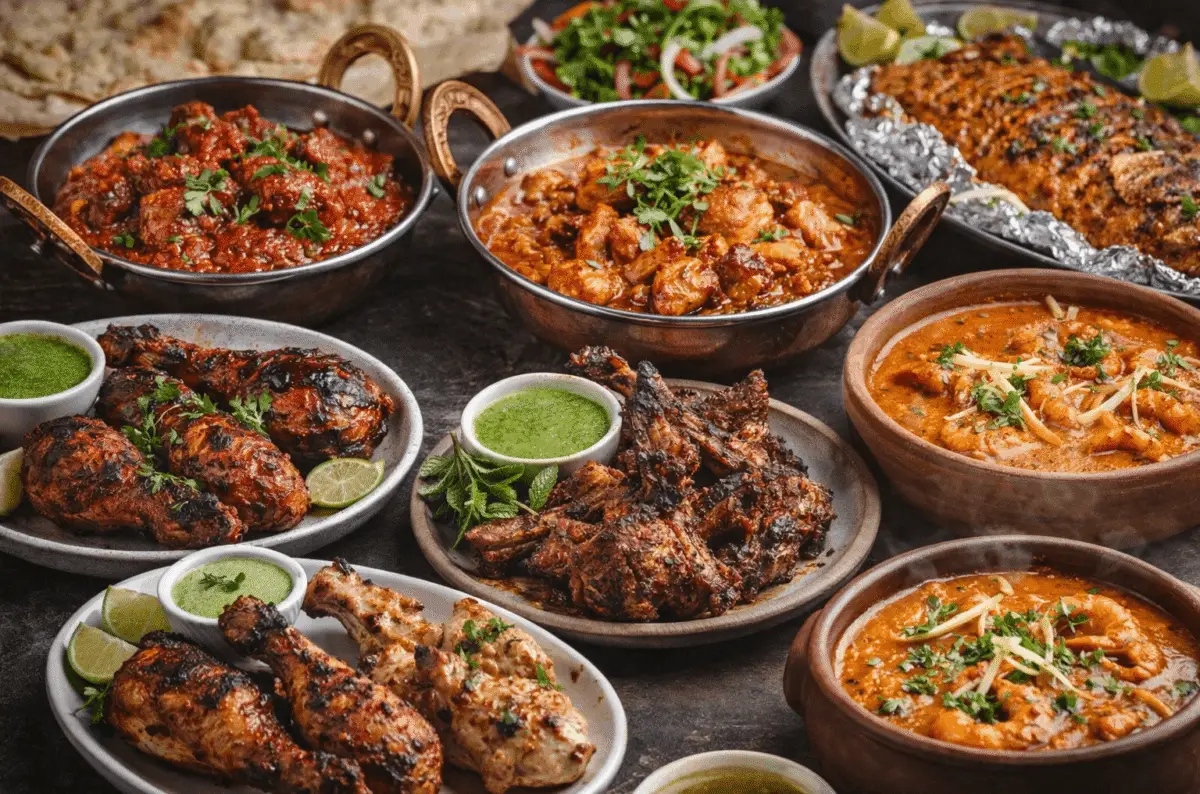
There is a specific kind of traveller who plans a trip around what they are going to eat. They research restaurants the way other people research museums. They schedule meals the way others schedule flights. They consider a day lost if they did not eat something genuinely memorable. If that is you, then Islamabad is a city that will reward your priorities more than almost any capital you have visited, and Pakistan’s food as a whole is a cuisine that will change your reference point for what South Asian cooking can be.
Islamabad is the political capital of Pakistan but it is, more relevantly for our purposes, the culinary crossroads of the country. Because it draws people from every province, every ethnic community, and every regional food tradition in Pakistan, the capital has developed a restaurant and street food scene that functions as a comprehensive introduction to Pakistan food in a way that no single regional city can match. You can eat your way from the Pashtun north to the Sindhi south, from the butter-rich heartland of Punjab to the austere and extraordinary cooking of Balochistan, without leaving the city’s main food corridors.
This guide covers the best food in Islamabad specifically, the traditional foods in Pakistan that every visitor should understand and seek out, the famous street food that defines the country’s culinary identity at its most unfiltered, the regional dishes that the capital brings together under one roof, and how Perch Travels and Tours designs food and cultural itineraries that give travellers genuine access to the best of Pakistan’s food from their first meal to their last.
Why Pakistan Food Deserves a Serious Place in the Global Culinary Conversation
Pakistan food is one of the most underrepresented major cuisines in the world. Ask most people outside South Asia to describe typical food of Pakistan and they will reach for vague gestures toward biryani, curry, or kebab without any specific knowledge of what makes the cuisine distinct, regional, and in many respects technically more sophisticated than the South Asian cooking that has reached international prominence.
The truth about Pakistan’s food is that it is one of the most internally diverse culinary traditions in Asia. A meal from Peshawar has almost nothing in common with a meal from Karachi except that both are made with quality ingredients and eaten with conviction. The lamb from the high pastures of Gilgit-Baltistan, the flatbreads of the Baloch desert, the mustard greens of the Punjab winter, the pallo fish of the Indus and its delta, and the dried apricot and walnut dishes of Hunza Valley are all Pakistani food but they speak completely different culinary languages and reflect completely different relationships between people and their land.
What unites popular food of Pakistan across its regions is a commitment to ingredients that are genuinely good, a preference for slow cooking methods that develop depth of flavour rather than shortcuts, and an understanding that food is not consumed privately but shared socially in quantities and with a generosity that communicates care as much as nourishment. Eating famous Pakistan food means participating in a culture in which the meal is an event, the guest is honored, and the quality of what is placed before you is a direct expression of how much you are valued.
Traditional Foods in Pakistan That Every Visitor Must Understand
Before exploring what Islamabad specifically offers, it is worth establishing the canon of traditional food from Pakistan that defines the national culinary identity and appears in some form in restaurants and homes across the country.
Nihari
Nihari is arguably the most important dish in Pakistan’s food culture. It is a slow-cooked stew of beef shin, marrow, and aromatic spices that was historically prepared overnight in clay pots buried in coal embers, served to workers and laborers in the early morning as the first and most sustaining meal of the day. The name comes from the Arabic word nahar, meaning day, because it was the dish that began the working day. In contemporary Pakistan, nihari is served from specialist restaurants that open before dawn and frequently sell out by mid-morning. The depth of flavor that twelve to fourteen hours of slow cooking produces in nihari is unlike anything in the broader South Asian culinary repertoire, and understanding this dish is the beginning of understanding what traditional food pakistan is really capable of.
In Islamabad, nihari is found at Islamabad’s dedicated breakfast spots near Aabpara and in the Melody Market area, where the early morning service draws serious eaters from across the city.
Karahi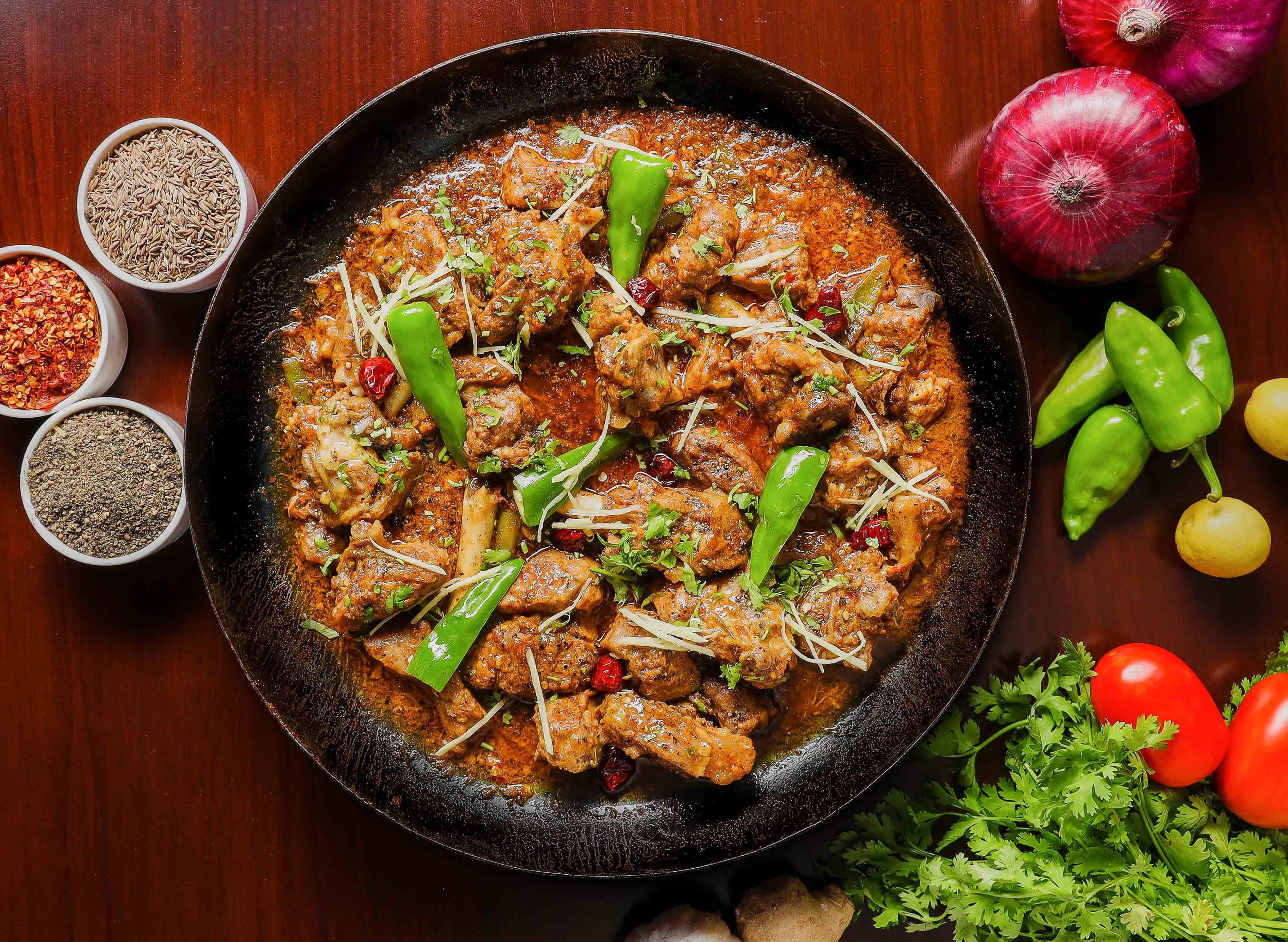
The karahi is Pakistan’s most versatile and most democratic preparation: chicken or mutton cooked in the iron wok that gives the dish its name, with tomatoes, green chilies, ginger, and garlic reduced to a concentrated sauce of remarkable intensity. The karahi is not a single recipe. It is a technique and a philosophy, and every region of Pakistan has its own version. The Peshawari karahi is white and simple, cooked in oil with almost no additional flavouring because the quality of the meat and the reduction of its juices is considered sufficient. The Lahori karahi adds more spice. The Islamabad version has developed its own hybrid character that draws from both traditions. In Islamabad, the best karahi is found in the F-7 Markaz area and in the dedicated karahi restaurants along Margalla Road.
Chapli Kebab
Famous pakistan food does not get more immediate than the chapli kebab. This flat, wide, heavily spiced minced meat patty is the signature preparation of Khyber Pakhtunkhwa and specifically of Peshawar, and it represents the Pashtun approach to meat cooking: maximum flavor from quality ingredients, cooked simply, eaten without ceremony. The chapli kebab is made from a mixture of beef or mutton mince combined with onion, tomato, egg, pomegranate seeds, coriander, and a blend of spices that varies between families and restaurants. It is cooked in animal fat in a wide tawa until the exterior crisps and the interior stays rich and juicy. In Islamabad, chapli kebab restaurants are concentrated along the Peshawar Mor area and throughout the F-series sectors where the Pashtun business community has established the city’s most reliable Peshawari food corridor.
Sajji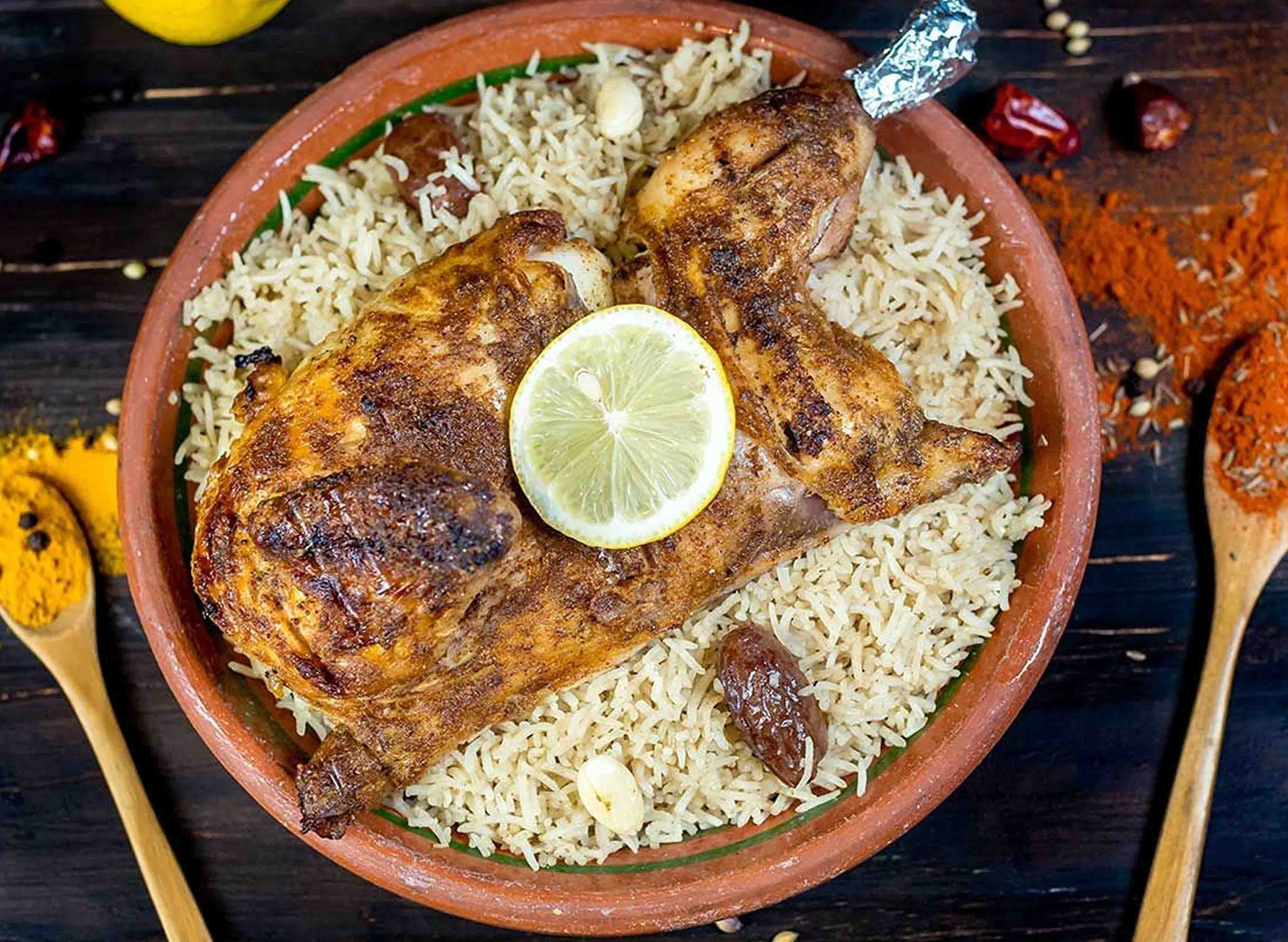
Balochistan Sajji, covered in detail in the Balochistan article in this series, has found a permanent place in Islamabad’s restaurant landscape. The whole roasted chicken or lamb prepared on skewers over an open wood fire is available at dedicated Sajji restaurants across the city, where the preparation method is maintained with reasonable fidelity to its Baloch origins. For visitors who will not be traveling to Quetta or Balochistan on their itinerary, Islamabad’s Sajji restaurants offer a genuine introduction to one of the most distinctive traditional foods in Pakistan.
Biryani
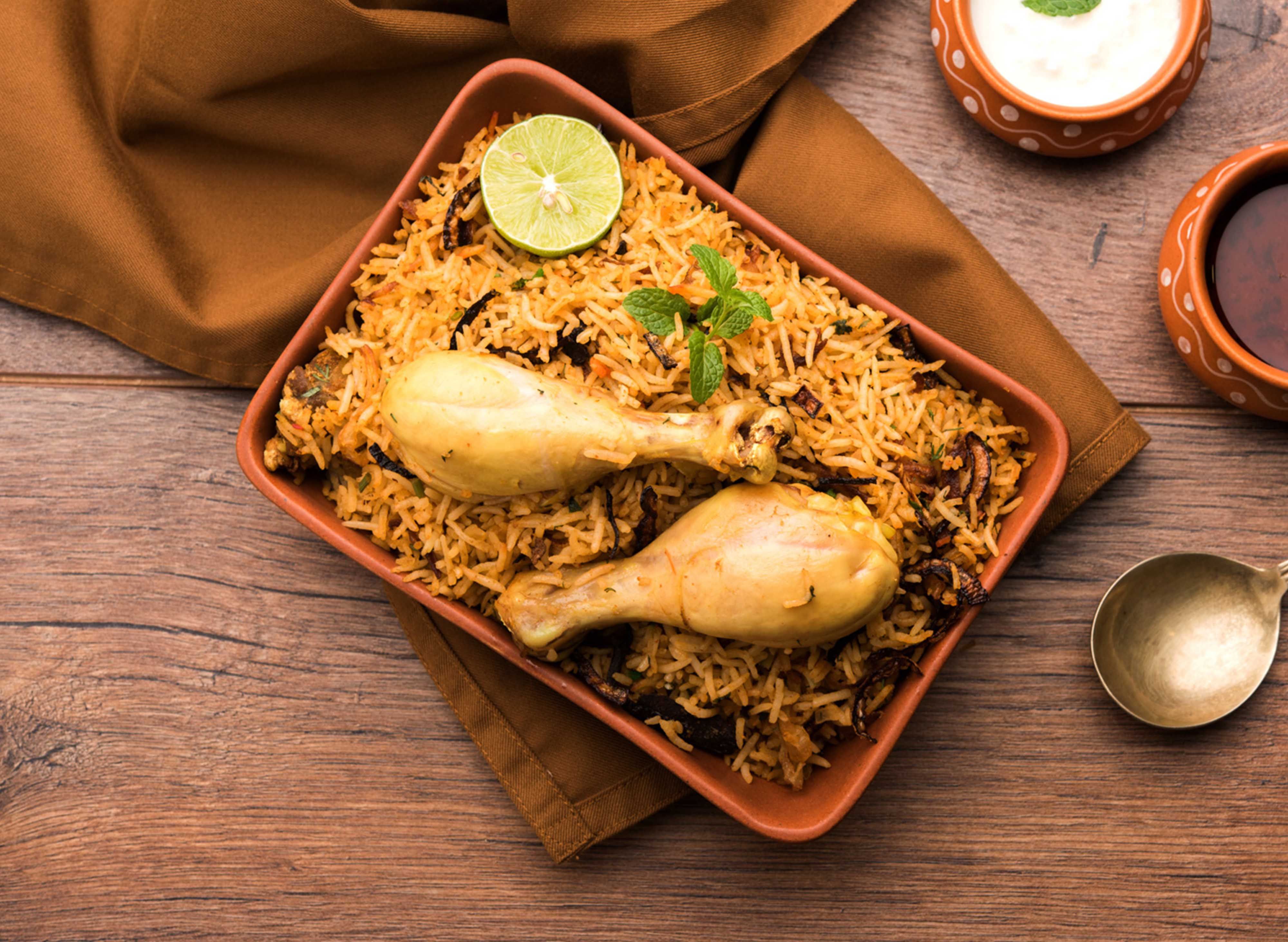
Pakistan’s biryani tradition is distinct from its Indian counterpart in ways that matter enormously to anyone who takes rice dishes seriously. Pakistani biryani is generally drier than the Hyderabadi version familiar to most international audiences, more heavily spiced, and built around meat that has been cooked separately and then layered with the rice rather than cooked together from the start. Sindhi biryani, which is the most widely eaten version across Pakistan, uses a combination of whole spices, potatoes, dried plums, and bone-in meat pieces to create a dish of considerable complexity. In Islamabad, biryani is available at every price point from roadside stalls to restaurant kitchens, and the variation in quality is enormous. The best biryani in Islamabad is generally found at smaller, specialist restaurants rather than large chains.
Halwa Puri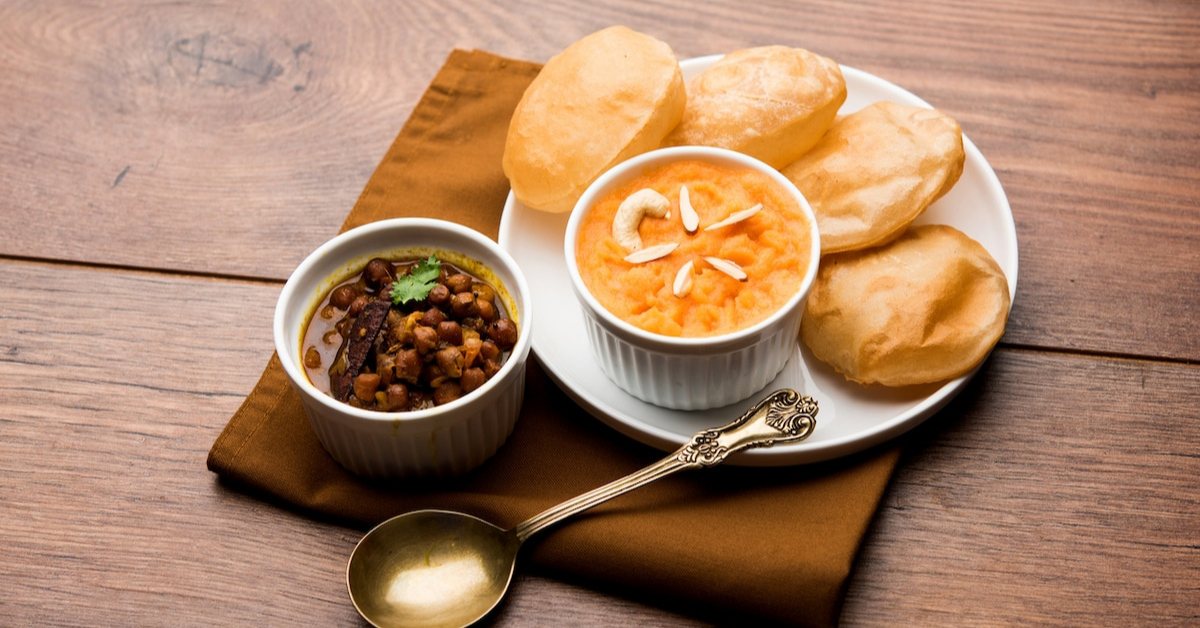
Halwa puri is Pakistan’s most celebrated breakfast combination and one of the most reliable indicators of a Pakistani family’s relationship with food on weekend mornings. The meal consists of puri, a deep-fried wheat bread that puffs dramatically when it hits hot oil, served alongside a sweet halwa made from semolina cooked in clarified butter and sugar, and accompanied by a chickpea curry called chana. The combination of the airy, slightly oily puri, the dense sweetness of the halwa, and the savory, spiced chana produces a breakfast of total sensory completeness that has no equivalent outside Pakistan. In Islamabad, halwa puri is served at breakfast-specific restaurants in Aabpara Market and in the G-9 and G-10 Markaz areas, typically from early morning until the supply runs out.
Daal Makhani and Daal Chawal
The lentil cooking of Pakistan is among the most underappreciated elements of Pakistan’s food culture because it sits in the shadow of the meat preparations that receive most of the attention. Pakistani daal is slow-cooked, heavily seasoned, and finished with a tarka of fried onion, garlic, and whole spices that transforms a simple ingredient into something deeply satisfying. Daal chawal, lentils with rice, is the everyday meal of millions of Pakistani households and the dish that, eaten in a home rather than a restaurant, best expresses the quiet, sustaining quality of traditional food from Pakistan at its most honest.
Paya
Paya, the slow-cooked trotters soup that is prepared for special occasions and serious early mornings, is one of pakistan food’s most labor-intensive and most rewarding preparations. Trotters from beef or mutton are cooked for six to eight hours with ginger, garlic, and whole spices until the collagen breaks down completely and the broth reaches a richness of body that is unlike any other soup in the cuisine. Paya is considered a restorative food in Pakistani culture, eaten after long nights and on cold mornings, and the best versions are prepared at specialist restaurants that have maintained the same overnight cooking practice for decades.
Famous Street Food Pakistan: Islamabad’s Street Food Scene
Famous street food Pakistan is not a single dish or a single location. It is an entire informal culinary ecosystem that operates at the edges of the formal restaurant world, producing food of extraordinary quality from equipment that is deliberately minimal because the focus is entirely on the cooking itself.
In Islamabad, the most important street food corridor is the Melody Market area in the G-6 sector, which has operated as one of the city’s most reliable food destinations for decades. The stalls and small restaurants clustered around Melody Market serve the full range of Pakistan foods at prices that are accessible to everyone, and the quality at the best stalls is genuinely comparable to formal restaurants in a way that reflects the democratic character of good street cooking everywhere in the world.
Gol Gappay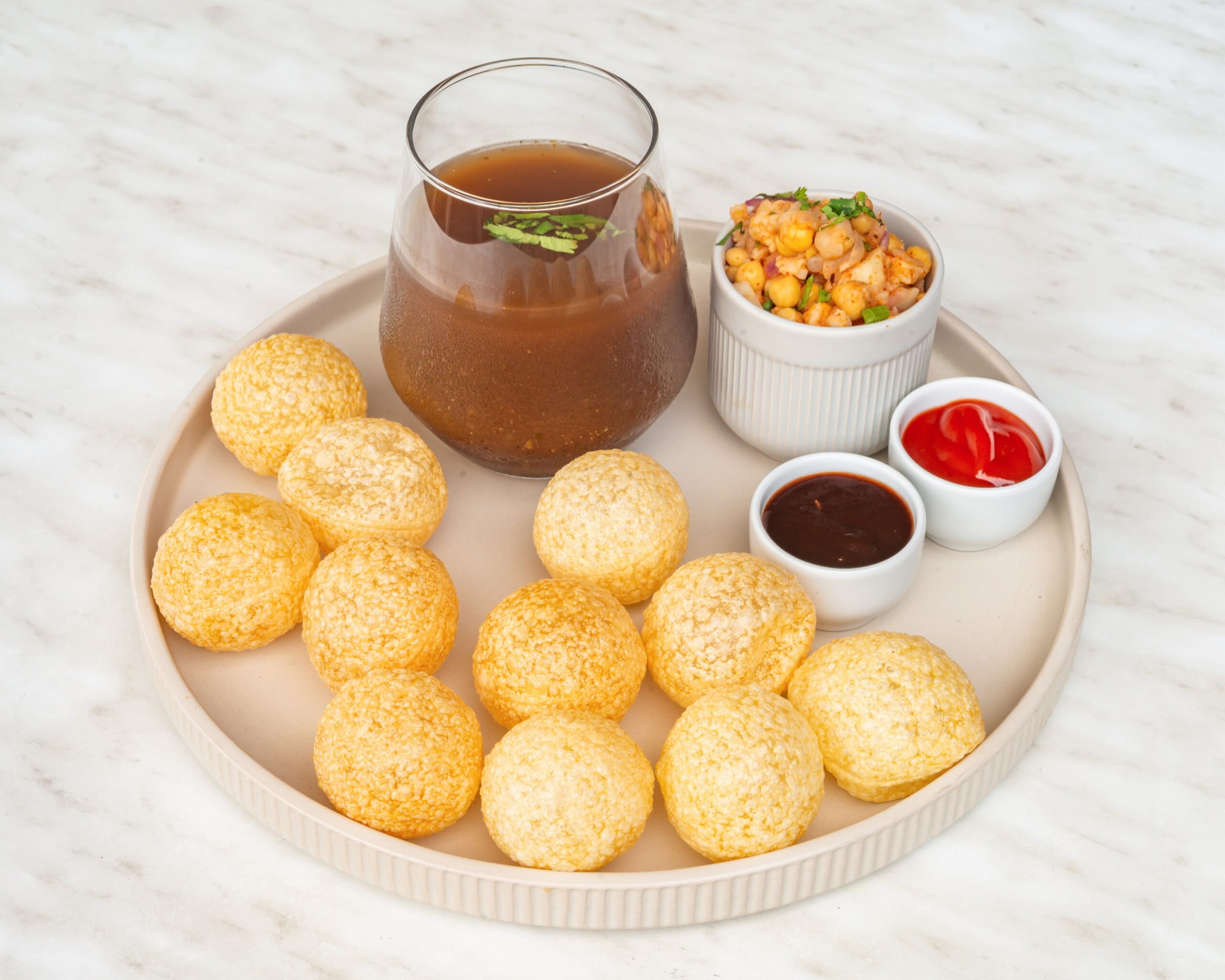
Gol gappay, known in other parts of South Asia as pani puri, is the street snack that most viscerally captures the pleasure of famous street food pakistan. Small, hollow fried wheat spheres are filled with a mixture of spiced mashed potato and chickpeas and then dipped in a sharp, intensely flavored water made from tamarind, mint, and spices. The entire bite is consumed in one go, and the balance of crunch, spice, tanginess, and starch is designed to be immediately addictive. Gol gappay stalls in Islamabad operate from carts in virtually every market and outside every school and college in the city.
Bun Kebab
The bun kebab is Pakistan’s version of the burger and it is consumed in volumes that suggest it fulfills the same cultural role. A spiced beef or lentil patty is fried on a tawa and placed inside a soft bun with sliced vegetables, tamarind chutney, and occasionally a fried egg. The result is simple, immediate, and deeply satisfying in the way that only food prepared quickly and eaten on the spot can be. The best bun kebab in Islamabad is widely debated but the consensus tends to settle on specific stalls in the Aabpara and Melody Market areas.
Dahi Bhalla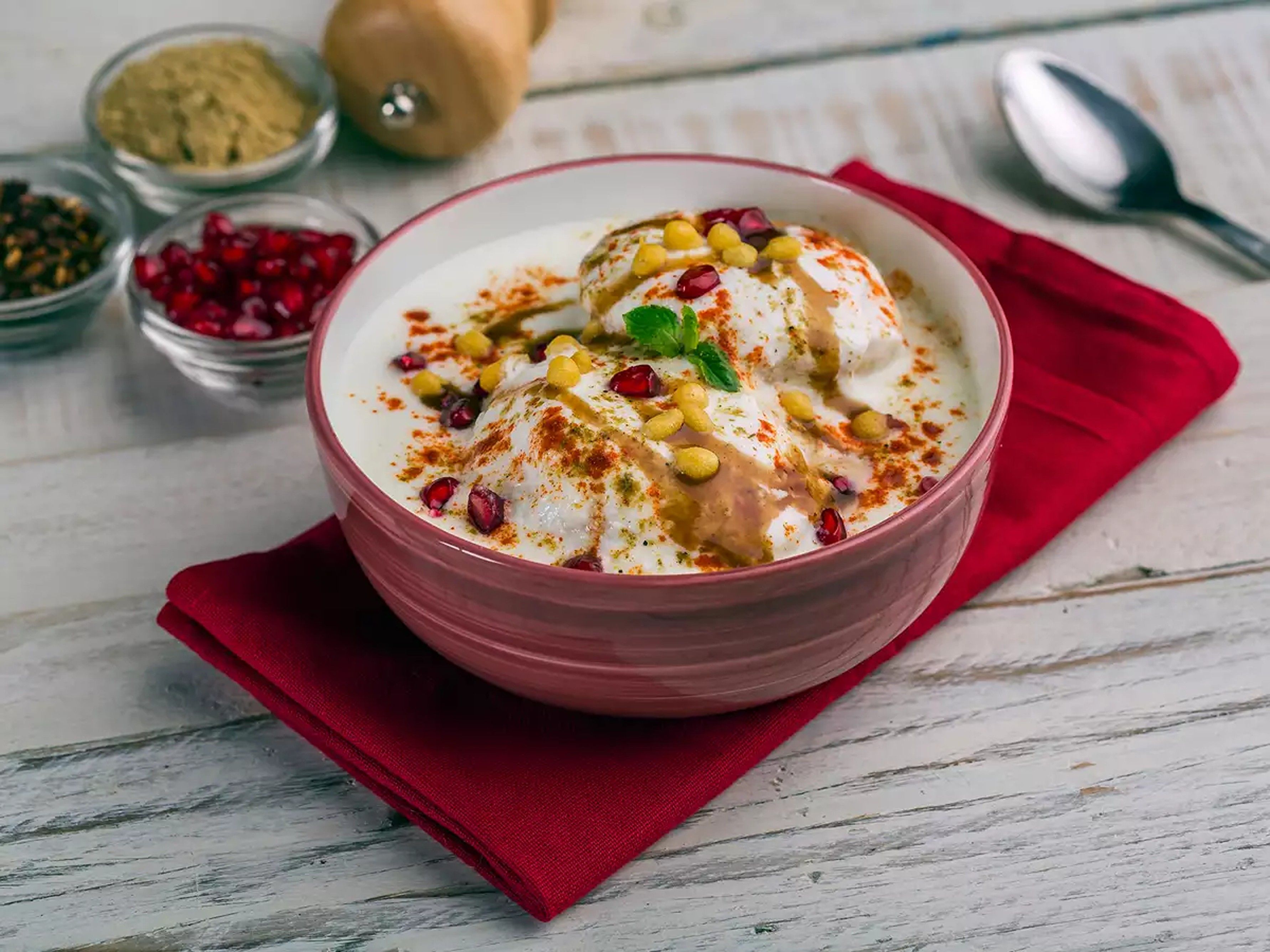
Dahi bhalla is one of the most refined preparations in pakistan street food: fried lentil dumplings soaked in cold sweetened yogurt and topped with tamarind chutney, mint chutney, and a sprinkle of chaat masala. The combination of temperatures, textures, and flavors in a good dahi bhalla is more sophisticated than the presentation suggests, and eating one from a skilled street vendor in Islamabad on a warm afternoon is an experience that rewards the attention given to it.
Samosa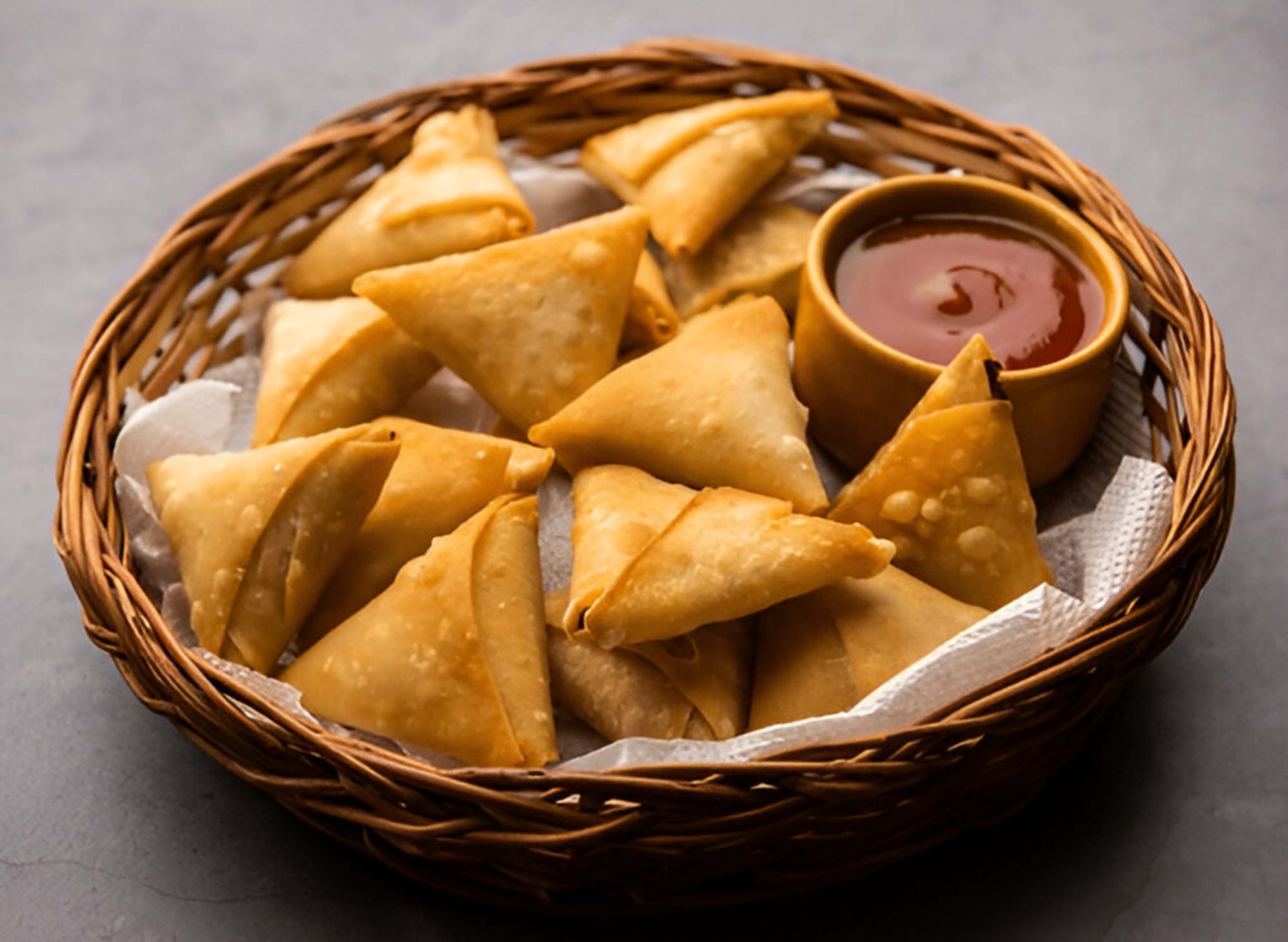
The Pakistani samosa deserves its own mention distinct from the South Asian samosa broadly because it is both larger and more heavily spiced than most international versions. Pakistani samosas are typically filled with either spiced minced meat or spiced potato and pea, enclosed in a thick, robust pastry that holds its structure after frying rather than crumbling immediately. They are eaten with tamarind and mint chutneys and constitute one of the most reliable roadside snacks in pakistan’s food culture.
Roasted Corn and Sugarcane Juice
Street food in Islamabad also includes the seasonal preparations that mark time in the culinary calendar. Roasted corn, bhutta, prepared over coal carts and rubbed with lemon and spice, appears in the evenings and is one of the most evocative sensory experiences of an Islamabad street at dusk. Sugarcane juice, pressed fresh from stalks on a mechanical press and served cold with ginger and lime, is the most refreshing drink in Pakistan’s street food landscape and the beverage that best expresses the connection between food from pakistan and the agricultural life that produces it.
Islamabad’s Best Dining Destinations
Monal Restaurant
Monal is the most famous restaurant in Islamabad and one of the most dramatically situated in Pakistan. Built into the Margalla Hills above the city at an elevation that provides panoramic views across the entire Islamabad valley, Monal serves a broad menu of Pakistani and continental dishes in a setting that makes any meal feel significant. The food quality is reliably good across their Pakistani menu, but the view, particularly at sunset and in the evening when the city lights extend across the valley below, is the reason most visitors include Monal on their Islamabad food itinerary. Reservations are essential during weekends and holidays.
Saidpur Village

Saidpur is a heritage village on the lower slopes of the Margalla Hills that has been preserved and developed into one of Islamabad’s most characterful dining destinations. Several restaurants operate within the village’s traditional stone and mud architecture, serving Pakistani food in settings that are aesthetically coherent with the village’s historical character. Salt’n Pepper Village is among the best known of these, serving a broad menu of Pakistani regional food in an outdoor garden setting. Visiting Saidpur for dinner provides both the food and the architectural experience of a pre-partition Pakistani village in a form that is more accessible and better maintained than most comparable heritage sites.
Kohsar Market, F-6
Kohsar Market in the F-6 sector is Islamabad’s most consistently good food destination for travellers who want to sit in a pleasant environment and eat quality Pakistani food alongside Islamabad’s diplomatic and international community. The market holds a compact concentration of good restaurants, cafes, and food shops within walking distance of each other, and the quality across the board is higher than most other parts of the city because the regular clientele are knowledgeable and demanding. Several restaurants in Kohsar serve regional Pakistani cuisine to a standard that rewards repeat visits.
Aabpara Market
Aabpara is the place to eat breakfast in Islamabad. The halwa puri and nihari establishments in this area serve the early morning properly and are frequented by locals rather than tourists, which means the food is made for regulars with high standards rather than for visitors who will not return. Eating breakfast at Aabpara before beginning a day of Islamabad exploration is one of the most genuine food experiences the city offers.
F-7 Markaz and Super Market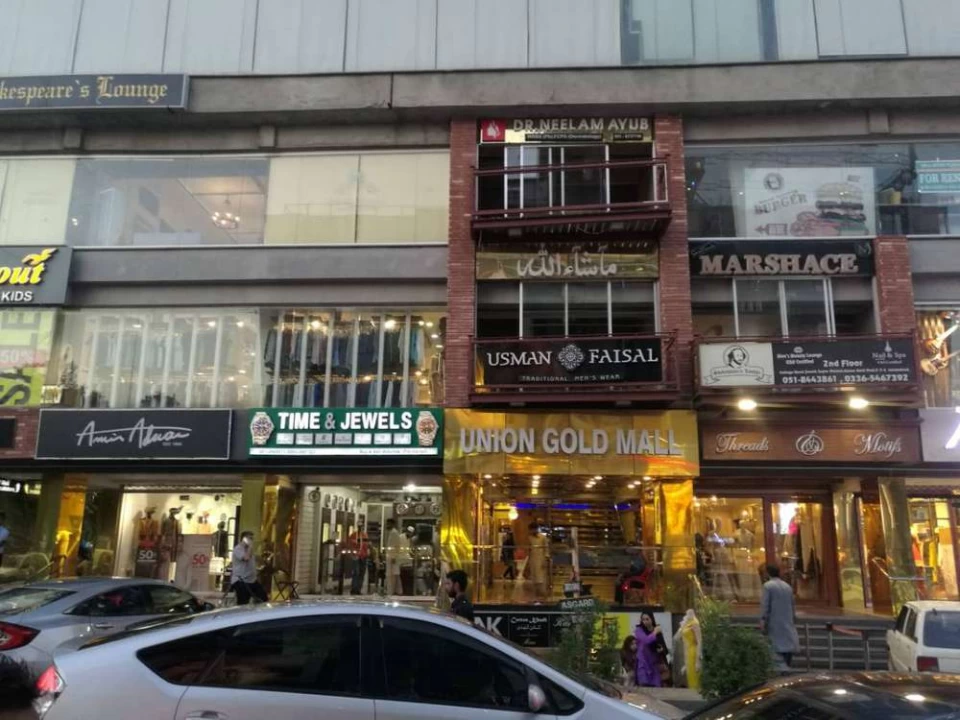
The F-7 Markaz and the adjacent Super Market area hold the highest concentration of quality restaurants in Islamabad across all categories. From Peshawari karahi specialists to Lahori paratha spots, from continental dining to the ice cream and dessert establishments that are central to Islamabad’s evening food culture, this area rewards unhurried exploration and return visits.
Pakistani Breakfast Culture: The First and Most Important Meal
Pakistani breakfast culture is one of the most distinctive elements of typical food of pakistan and one that international visitors frequently describe as revelatory. The Pakistani approach to breakfast is not about speed or convenience. It is about nourishment at a scale that reflects the assumption that the meal needs to carry you through a morning of real physical or mental work.
The halwa puri breakfast already described is the most celebratory version. On working days, the typical Pakistani breakfast in a household is a paratha, the layered flatbread fried in clarified butter or oil, served with fresh yogurt, a boiled egg, and either chai or lassi. The paratha in Pakistan is a different object from its equivalent in other South Asian cuisines. It is thicker, crispier on the outside, and considerably richer in fat content, which makes it both more filling and more deeply satisfying than the thinner version familiar to most international audiences.
Chai, Pakistan’s ubiquitous milky tea, is the drink that frames every breakfast and most other social moments in the country. Pakistani chai is brewed strong with loose leaf tea, combined with full-fat milk, and sweetened with sugar to a degree that would seem excessive by the standards of most tea-drinking cultures. It is not excessive. It is exactly right, and drinking a properly made chai in Islamabad in the morning is one of the simplest and most genuine pleasures the country offers.
Pakistani Desserts and Drinks Worth Seeking Out
Pakistan’s dessert tradition is rich, regionally diverse, and in several cases technically demanding in ways that are not immediately apparent from the finished product.
Gajar ka halwa, a slow-cooked reduction of grated carrot, full-fat milk, clarified butter, and sugar, is the most widely eaten Pakistani dessert and the one that most clearly expresses the cuisine’s relationship with patience and reduction. Good gajar ka halwa takes several hours to make and cannot be rushed without losing the depth of caramelisation that makes it distinctive. It is served hot in winter and is one of the most satisfying cold-weather desserts in the entire South Asian canon.
Kheer, the Pakistani rice pudding, is similarly built on reduction: rice, full-fat milk, sugar, cardamom, and rose water cooked slowly until the milk concentrates and the rice dissolves into a thick, scented cream. It is served at celebrations, on special occasions, and at the end of meals that have been prepared with care.
Kulfi is Pakistan’s traditional frozen dessert, denser and more intensely flavored than commercial ice cream, made from condensed full-fat milk with flavours that include pistachio, cardamom, mango, and rose. Kulfi stalls in Islamabad operate in the evening and are a central feature of the city’s night food culture.
Lassi, both sweet and salty, is the most important cold drink in pakistan food culture. The sweet version is simply yogurt blended with sugar and cold water to varying thicknesses, sometimes topped with cream. The salty version adds roasted cumin and sometimes mint. Both versions are deeply refreshing in the Islamabad summer heat and both are consumed in volumes that suggest they function as much as a food as a drink.
How Perch Travels and Tours Brings Pakistan’s Food Culture to Life
Food tourism in Pakistan requires the same local knowledge, cultural connection, and logistical preparation that any other form of Pakistani travel requires. Knowing that Islamabad has good food is useful information. Knowing exactly which nihari stall opens at five in the morning, which family in Hunza prepares chapshuro from the grain grown in their own field, and which bazaar in Peshawar has the best chapli kebab available before noon requires the kind of ground knowledge that only comes from years of relationship-building in these communities.
Perch Travels and Tours’ Taste and Tradition service is designed precisely to provide this access. Their cultural food experiences include market walks with local cooks in Lahore, Peshawar, Karachi, Hunza, and Islamabad, home kitchen sessions with Pakistani families who prepare traditional food pakistan according to methods passed through generations, street food trails through the markets and corridors that define pakistan’s famous street food culture, artisan workshops that connect food with craft and textile tradition, and guided walks through historic bazaars where food, culture, and commerce have coexisted for centuries.
For travelers whose Islamabad visit is part of a broader Pakistan itinerary, Perch also incorporates food experiences specific to each destination: Balochistan Sajji in Quetta, the walnut and apricot cuisine of Hunza, the river fish preparations of the Makran Coast, and the centuries-old kebab and slow-cooked meat traditions of Peshawar’s Qissa Khawani Bazaar. Each food experience is planned as an encounter with the culture that produced it rather than a meal consumed in isolation.
Their Transportation Services handle all ground movement within Islamabad and between the city and other destinations, ensuring that food itineraries are executed on time and without the logistical friction that can reduce a carefully planned meal to an afterthought. Their Flight Services team handles international connections into Islamabad’s Benazir Bhutto International Airport for clients arriving from the UAE, UK, Germany, the United States, Australia, and other origins.
Perch Travels and Tours is based in Islamabad with deep operational roots across Pakistan, and their 5.0 Google rating from over 24 verified clients reflects the consistency with which they deliver genuine, detailed, and carefully managed experiences. Their philosophy that luxury is the quality and rarity of the experience rather than a price bracket applies as much to a perfectly timed early morning nihari breakfast as to a destination wedding on the Amalfi Coast.
Contact Perch Travels and Tours at contactus@perchtravelsandtours.com or visit perchtravelsandtours.com to plan your Islamabad food journey and the wider Pakistan culinary itinerary that should follow it.
Frequently Asked Questions About Pakistan Food and Eating in Islamabad
What is the most famous food of Pakistan that visitors should try first?
The most famous food of Pakistan and the dish that best introduces the depth and character of the cuisine is nihari. This slow-cooked beef shin stew, prepared overnight and served in the early morning, represents everything that traditional food in Pakistan does at its highest level: patience, quality ingredients, complex spicing, and a flavor depth that cannot be achieved quickly. In Islamabad, nihari is served at specialist breakfast restaurants near Aabpara Market and Melody Market from before dawn until the supply is finished, typically by mid-morning. Eating nihari in Islamabad at six in the morning with a freshly baked naan and a cup of strong chai is an introduction to Pakistan food that changes the frame of reference for every meal that follows. Beyond nihari, karahi, chapli kebab, halwa puri, and biryani are the other dishes that most completely express the breadth of pakistan foods across regions and occasions.
What is the best area for food in Islamabad?
The best area for food in Islamabad depends on what type of experience you are looking for. For formal restaurant dining with the best selection of regional Pakistan food under one concentrated area, F-7 Markaz and the adjacent Super Market area hold the highest number of quality restaurants across all categories. For street food and the most authentic popular food of pakistan at accessible prices, Melody Market in G-6 and the Aabpara area are the most rewarding. For the best breakfast in Islamabad, Aabpara Market is where the most dedicated halwa puri and nihari establishments operate. For dining with exceptional views in a heritage setting, Monal Restaurant on the Margalla Hills and the restaurants of Saidpur Village provide experiences that combine food with architectural and natural beauty. Perch Travels and Tours’ Taste and Tradition service designs food itineraries that cover all of these areas across a multi-day Islamabad visit, sequenced to make the most of each area’s specific strengths and opening hours.
Is Pakistani street food safe to eat for international visitors?
Pakistani street food is generally safe to eat for international visitors who apply the same judgment they would apply at any street food destination in the world. Eat from stalls with high turnover, where food is cooked fresh in front of you rather than sitting prepared for extended periods. Avoid food that has been exposed to the sun for a long time. Drink water from sealed bottles rather than from open containers. These are basic precautions rather than Pakistan-specific concerns, and thousands of international visitors eat from Pakistan’s famous street food stalls every year without difficulty. Working with Perch Travels and Tours on a food itinerary means that street food selections are made by people with local knowledge of which stalls maintain consistent quality and hygiene standards, which removes the guesswork entirely and lets you focus on the experience of eating rather than the logistics of finding the right place.
How does Perch Travels and Tours incorporate food into Pakistan travel itineraries?
Perch Travels and Tours incorporates food into Pakistan travel itineraries through their Taste and Tradition service, which is a dedicated cultural food experience program covering major destinations across Pakistan. In Islamabad, this includes market walks with local cooks, street food trails through Melody Market and Aabpara, breakfast experiences at the city’s specialist halwa puri and nihari establishments, and restaurant visits to the best karahi, sajji, and regional Pakistani food destinations in the city. For travelers extending their Pakistan itinerary beyond Islamabad, Perch designs food-specific experiences in each destination that connect the meal with the culture that produced it: Sajji and Balochistan food in Quetta, Peshawari chapli kebab and namak mandi in Peshawar, Lahori street food and Mughal-era culinary culture in Lahore, and the walnut, apricot, and mountain grain cuisine of Hunza Valley. Every food experience is treated as a cultural encounter rather than a logistical necessity, and the local knowledge that Perch brings to each destination means that the food travellers eat is the food the community itself considers its best rather than the version produced for the tourist market.